Pitru Dosh Nivaran: Signs, Meaning & Traditional Remedies
In this guide
- 1. What Pitru Dosh Means in Tradition
- 2. How Pitru Dosh Is Said to Arise
- 3. Common Signs of Pitru Dosh, Described as Beliefs
- 4. Pitru Dosh Nivaran Remedies in Shradh Tradition
- 5. Choosing the Right Time for the Remedies
- 6. Narayan Bali and Other Special Remedies
- 7. Simple Daily Remedies and Acts of Charity
- 8. Practical Checklist for Families
- 9. Why an Experienced Pandit Matters
What Pitru Dosh Means in Tradition
In Hindu tradition, pitru dosh nivaran refers to the rituals and observances a family performs to seek peace for their ancestors, known as pitras, when they believe the ancestral line is unsettled in some way. Nivaran simply means removal or resolution, so the phrase is commonly understood as the remedies for pitru dosh. Families usually arrive at this subject during a difficult moment — sometimes after an astrologer’s reading, sometimes at an elder’s suggestion — and this guide is written with that sensitivity in mind.
It helps to say at the outset that pitru dosh is a concept from Jyotish, or Vedic astrology, and is not a proven condition. Astrologers do not all read the same chart the same way, and a tradition that recognises pitru dosh sits alongside families who have never heard the term. What follows describes how the idea is commonly understood in mainstream North Indian practice, and which remedies are traditionally suggested — presented as belief and custom, not as certainty, and with no guaranteed outcomes claimed.
Want this ritual done the authentic way?
Book Shradh & Pind DaanHow Pitru Dosh Is Said to Arise
In astrological readings, pitru dosh is usually attributed to certain placements involving the Sun, Rahu, Ketu, or the ninth house of the birth chart, which is traditionally associated with the father and the ancestors. Alongside the chart, folk tradition connects it with incomplete ancestral rites — a Shradh that was never performed after a death, rites done without proper vidhi (procedure), or sapindikarana, the ceremony that formally brings an ancestor into the family’s annual Shradh cycle, having been skipped.
Tradition also speaks of the dosh in terms of karma carried across generations: obligations left towards ancestors that later fall to their descendants to fulfil through ritual. This is a matter of faith, and it is best held lightly alongside ordinary practical sense. A difficult stretch in health, work or family life always deserves proper real-world attention — medical care, financial advice, honest conversation — with ritual acting as a source of structure and solace rather than a substitute for that care.
Common Signs of Pitru Dosh, Described as Beliefs
Several signs are popularly associated with pitru dosh, and it is worth stating plainly that these are beliefs, not diagnostic criteria. In practice, families tend to recognise a pattern only after an astrologer has mentioned the dosh; the signs confirm a story rather than establish one. The most commonly described signs include recurring obstacles in work or finances despite steady effort, persistent disagreement at home, delays in marriage-related matters, and a general atmosphere of anxiety about the family’s wellbeing.
Other signs often listed include a sense of heaviness or unexplained worry, setbacks connected with property or inheritance, difficulties in having children, and a feeling that one trouble has followed another across a long stretch. Astrologers may also point to specific combinations seen while matching a Kundli (horoscope). None of these proves that pitru dosh is present — similar experiences have many ordinary explanations. They are included here so you can recognise the vocabulary you may hear, not to draw conclusions about your own family.
Pitru Dosh Nivaran Remedies in Shradh Tradition
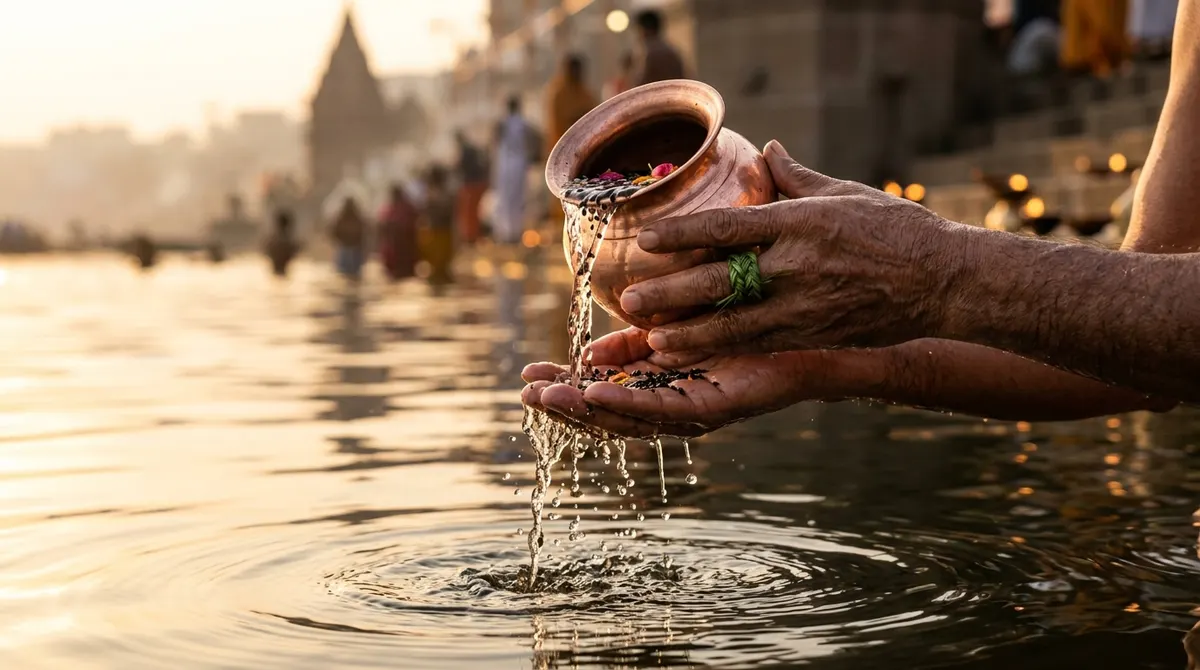
The most widely recommended pitru dosh nivaran measures are ordinary Shradh observances rather than elaborate ceremonies. Tarpan is the first: an offering of water, usually mixed with black sesame or til, made to the ancestors during prayer. Next is Shradh itself — the annual offering of food and prayers on the tithi (lunar date) of a relative’s passing, or during the Pitru Paksha fortnight. Third is pind daan, in which rice pinds mixed with sesame, ghee and water are offered for the peace of the ancestors.
Families are usually advised to begin with regularity rather than scale. Observing tarpan on Amavasya (the new moon day) and through Pitru Paksha, performing Shradh on the correct tithi, and arranging a full pind daan — at Gaya Ji or another tirtha (sacred place) — cover the heart of what tradition asks. The exact combination should be decided with your family pandit, who knows your particular customs. Traditional belief places the weight on sincerity and correct vidhi, not on the size or expense of the arrangement.
Choosing the Right Time for the Remedies
Timing matters in Shradh practice. Pitru Paksha, the fortnight dedicated to ancestors in the Hindu month of Ashwin (usually September–October), is the most widely observed period; Amavasya, the new moon day, is another common day for tarpan and Shradh. Beyond these, each family observes the annual Shradh on the tithi of a loved one’s passing, and some also choose a day suggested by their pandit for a particular pitru dosh nivaran remedy. Specific dates vary every year, so it is best to confirm the calendar with your pandit rather than relying on a printed list.
For a family starting fresh, a sensible pattern is regular tarpan at home, a properly performed Shradh on the family tithi, and a fuller pind daan or special rite when the pandit advises it. Planning ahead matters: pandits are busy during Pitru Paksha, samagri needs gathering, and travel to a tirtha such as Gaya or Trimbakeshwar should be booked early. Spreading the observances across the year, rather than attempting everything on one day, is also considered a sound approach in tradition.
Narayan Bali and Other Special Remedies
When a family believes the difficulty runs deeper, an experienced pandit may suggest a karmkand (prescribed rite) such as Narayan Bali — a multi-day Shradh performed to seek peace for ancestors whose rites are regarded as incomplete or unsettled, traditionally undertaken at places like Trimbakeshwar and Gaya. Other suggestions include Tripindi Shradh, Brahmin Bhojan (the feeding of brahmins), and specific jap (repetitive chanting) or hom (a fire ritual) performed under supervision.
These are larger undertakings. They take time, preparation, a suitable location and a knowledgeable purohit (priest), and they should not be self-prescribed from an article or a video. The right sequence depends on your family’s situation and on the reading of a trusted pandit or acharya. If a particular rite has been suggested to you, ask what it involves, why it is being recommended, how long it will take, and what you will need to arrange — an experienced pandit will explain all of this before you begin.
Simple Daily Remedies and Acts of Charity
Alongside the formal rites, tradition places great weight on everyday gestures of respect. Commonly suggested acts include feeding brahmins on Shradh days, offering food to cows and to crows — crows being regarded in folk belief as messengers of the Pitras — giving food or dakshina (a ritual offering) to those in need, donating grain, sesame or white cloth within one’s means, and keeping an evening lamp lit. Serving elderly parents and relatives with patience is considered among the highest forms of ancestral respect.
The tradition is consistent on one point: these acts are offerings, not transactions. They are done quietly, without display, and without bargaining for a particular result. A family on a modest budget can observe pitru dosh nivaran with a simple Shradh at home, regular tarpan and sincere charity — that is entirely within the spirit of the practice. Claims of guaranteed relief or fixed timeframes are not part of mainstream teaching, and none are made here.
Practical Checklist for Families
If your family has been advised to undertake these observances, the following checklist keeps preparation manageable and avoids last-minute stress:
- Confirm the tithi (lunar date) and the suggested remedy with an experienced pandit
- Book the pandit early, especially before Pitru Paksha or Amavasya, when demand is high
- Ask which samagri the pandit will bring and which items the family should arrange
- Keep gotra (lineage) names and ancestor details ready for the sankalp, the solemn vow that opens the rite
- Prepare a clean space with a diya (lamp), kalash (copper pot) and seating for the ceremony
- Plan simple sattvic meals, and arrange Brahmin Bhojan if it is part of your observance
- Keep white flowers, kusha grass, til and gangajal (Ganga water) ready the evening before
- After the rite, continue tarpan and charity on the days your pandit suggests
Why an Experienced Pandit Matters
Shradh rites involve precise mantras, a fixed sequence of sankalp, tarpan and daan (offering), and knowledge of gotra and tithi details that vary between families. A small slip in the vidhi can leave a family wondering whether the ritual was done correctly — an avoidable worry at an already emotional time. An experienced pandit performs these ceremonies daily, knows the regional variations, and can explain each step simply, so the family understands what is happening rather than merely watching it.
Divyanushthan connects families with verified Vedic pandits for Shradh, pind daan and related observances. Our pandits can help you understand which remedy fits your family’s situation, arrange the necessary samagri, and conduct the ceremony with accuracy and care. They will also explain the meaning behind each step in plain language, so you can take part with understanding rather than anxiety. The aim is simply that you are able to fulfil this ancestral duty with confidence, and with peace of mind during a sensitive time.
Want this ritual done the authentic way?
Book Shradh & Pind DaanFrequently Asked Questions
What does pitru dosh nivaran mean?
It is the traditional set of observances a family undertakes to seek peace for ancestors — most commonly tarpan (water and sesame offering), the annual Shradh on the family tithi, and pind daan (offering of rice pinds). It is a matter of faith and ancestral duty, not a guaranteed remedy.
Can pitru dosh really be identified from a horoscope?
Astrologers identify it through specific placements in a birth chart, but interpretations differ between astrologers and it remains a matter of belief. Any real-life difficulty should also receive ordinary practical care alongside any ritual the family chooses to perform.
Which remedies should a family start with?
Most pandits suggest starting simply: regular tarpan, Shradh performed correctly on the annual tithi, and pind daan if advised. Traditional belief values a sincere, correctly performed small observance over an elaborate one arranged in haste.
Is extra shanti needed if we already perform annual Shradh?
Families who perform Shradh correctly every year are generally considered to be meeting the core obligation towards their ancestors. If an astrologer has suggested something additional, ask an experienced pandit what it adds and why it is being recommended for your family.
When is the best time to perform these remedies?
Pitru Paksha and Amavasya (new moon day) are the most common periods, along with the annual family tithi. Specific dates change each year, so confirm the calendar with your pandit rather than relying on a fixed list.
Related guides
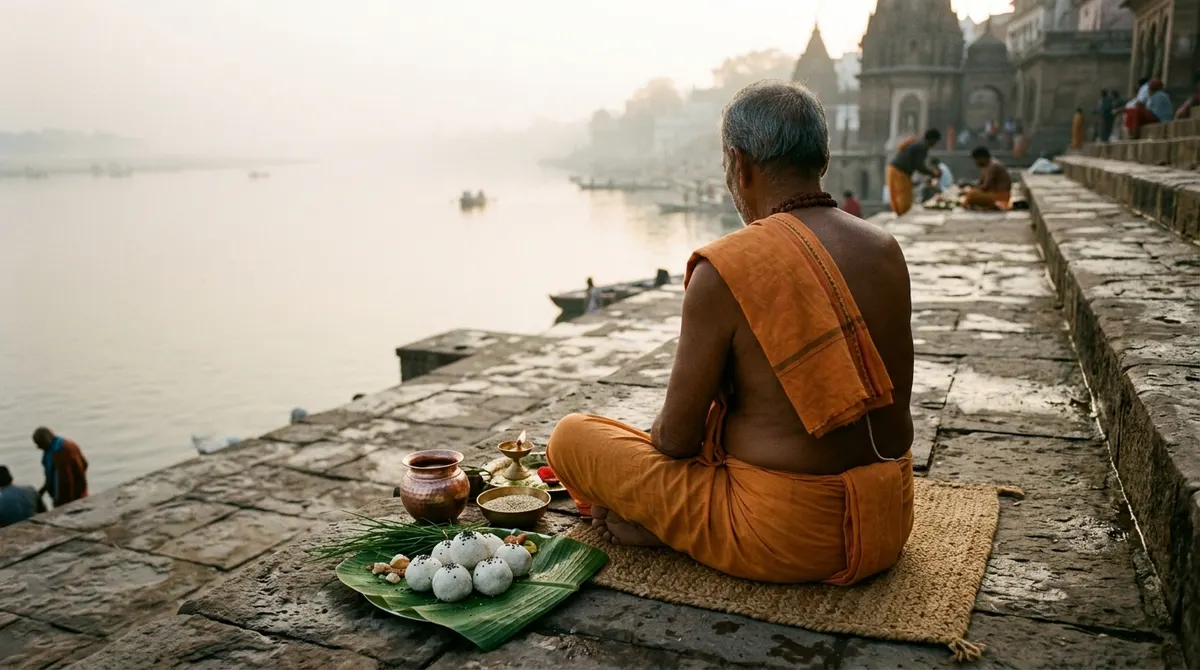 ShradhGaya Pind Daan: Complete Guide for Shradh RitualA complete guide to gaya pind daan — its meaning in Shradh tradition, significance, preparation, and procedure for performing this sacred ancestral ritual.8 min read
 ShradhNarayan Bali vs Tripindi Shradh: Key DifferencesA clear comparison of narayan bali vs tripindi shradh — the purpose of each rite, when it is traditionally advised, where it is done, how long it takes and who attends.7 min readShradhShradh Samagri List: Complete Guide for FamiliesA complete shradh samagri list for families — core offering items, what the purohit brings, what you arrange at home, pind daan additions and Brahmin Bhojan planning.8 min read