Shradh Samagri List: Complete Guide for Families
In this guide
- 1. What You Need and Why Preparation Matters
- 2. Shradh Samagri List: The Core Items
- 3. What the Purohit Usually Brings
- 4. What the Family Typically Arranges
- 5. Special Items for Pind Daan
- 6. Bhojan and Brahmin Bhojan Arrangements
- 7. Regional Variations and Custom Additions
- 8. Practical Checklist: Two Days Before and the Morning Of
- 9. Why an Experienced Pandit Matters
What You Need and Why Preparation Matters
A complete shradh samagri list is the simplest way to prepare for a Shradh ceremony without last-minute scrambling. The offerings made to ancestors are humble by design — grain, water, sesame, flowers — but each item has a role in the vidhi (procedure), and a missing item can interrupt the ritual at the moment it matters most. Most families find that writing the list down two days ahead, and confirming it with the pandit, removes almost all of the stress.
It also helps to know that the work is usually shared. In most households the purohit (priest) brings the specialist items — kusha grass, sacred thread, the components used in sankalp, the solemn vow that opens the rite — while the family arranges the everyday provisions: rice, sesame, water, flowers, fruit and food for the bhojan (communal meal). The exact split varies by region and by pandit, so treat the list below as a working template and confirm the details for your own ceremony.
Want this ritual done the authentic way?
Book Shradh & Pind DaanShradh Samagri List: The Core Items
These items appear in almost every North Indian Shradh, whether performed at home or at a tirtha (sacred place). Quantities depend on the number of ancestors being honoured and the specific vidhi your pandit follows:
- Akshat (unbroken rice) — for pinds and tilak, usually a few hundred grams
- Til (black or white sesame seeds) — mixed with rice for pinds and with water for tarpan
- Kusha grass (darbha) — used for purification, seating and filtering water during tarpan
- Barley (jau) and wheat — included in pind preparation in many family traditions
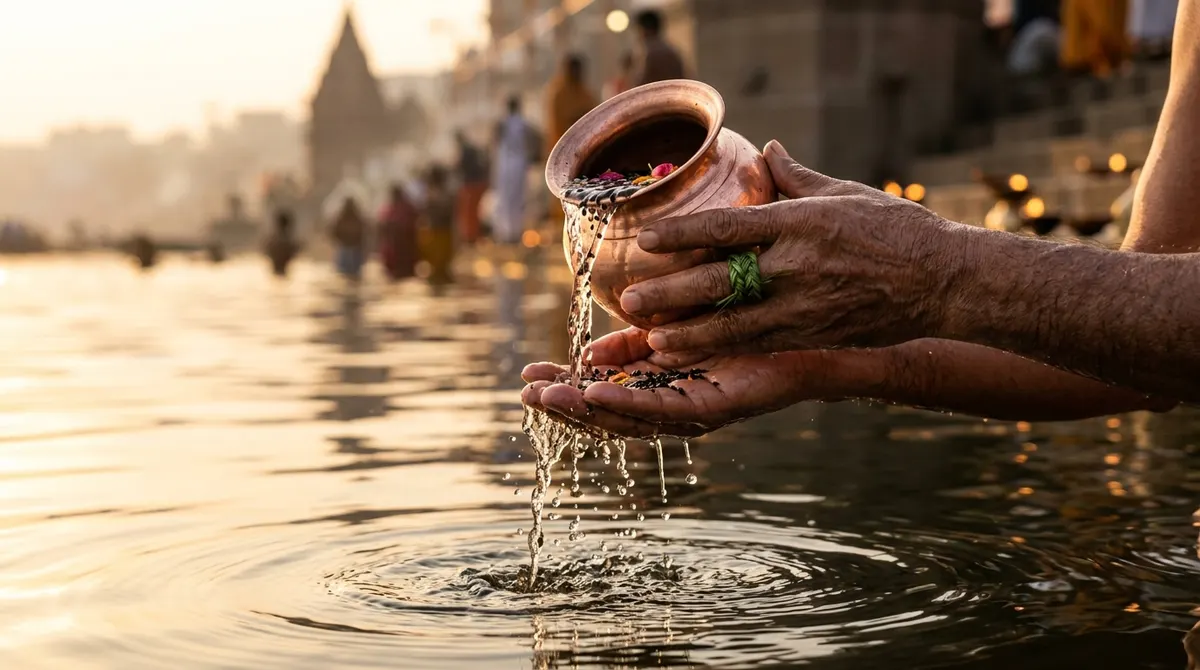
- Gangajal (Ganga water) — mixed with plain water for tarpan and achaman (ritual sipping)
- Ghee (clarified butter) — added to pinds and used to light the diya (lamp)
- White flowers — typically marigold or lotus, avoiding strongly scented or dark flowers
- Tulsi or other leaves as specified by the pandit for the particular rite
- Moli (sacred thread), janeu and a small diya for the home altar
- Fruits, sweets and panchamrit for prasad (the sanctified offering distributed at the end)
What the Purohit Usually Brings
An experienced pandit arrives with the items that require specific form or consecration: kusha grass, a small kalash (copper pot) if the family does not have one, roli (sacred red powder) and haldi (turmeric), moli thread, incense, a copper plate or patra where the vidhi calls for it, and the mantras written or printed for sankalp and the prayers. Many also carry a standard Shradh kit containing the smaller items, so families do not have to hunt for them in local shops.
They also bring the knowledge that holds the ceremony together — the correct sequence, the mantras, and the adjustments needed for your family’s customs. It is worth asking your pandit in advance for their samagri list in writing, along with what they expect the family to provide. Experienced pandits are usually happy to do this, and some can arrange the samagri themselves as part of the booking, which saves the family a market trip on a difficult day.
What the Family Typically Arranges
The family’s share is mostly the provisions available from any local market: rice, til, barley, wheat, seasonal fruits, flowers, milk, curd, ghee, sugar, a packet of moli, a few diya and incense sticks, and plain water — gangajal can be brought from a temple or another trusted source. You will also want clean seating mats, a low wooden chowki (small table) for the offerings, fresh clothes for the participants, and arrangements for washing hands and feet before the rite begins.
Beyond objects, the family arranges logistics: confirming the date and time, giving the pandit the gotra (lineage) names and ancestor details needed for sankalp, keeping the space clean and quiet, and planning meals. If Brahmin Bhojan, the traditional meal offered to brahmins after the rite, is part of your observance, the cooking and seating should be planned the previous day. Assigning one family member as coordinator — the person who answers the pandit’s questions on the day — makes everything run calmly.
Special Items for Pind Daan
Pind daan, the offering of rice balls for the ancestors, needs a slightly longer shradh samagri list. Along with akshat and til, many traditions use barley (jau) or soaked barley, urad dal, and sometimes wheat flour in the pinds, bound with water and ghee. Keep a clean cloth to sit on, a separate vessel for water, and black sesame kept aside for the tarpan step. At places like Gaya Ji, samagri is also sold near the ghat (riverbank steps), though buying everything in advance at home is usually calmer and more predictable.
For a ceremony at a tirtha, travel light but not bare: carry the items that are hard to find there, and plan to source water and fresh flowers locally. Your Divyanushthan pandit can tell you what is usually available at the venue and what is worth bringing from home. The guiding principle across regions is the same — simple, clean, vegetarian offerings, bought fresh, with nothing stale or left over from an earlier ceremony.
Bhojan and Brahmin Bhojan Arrangements
Shradh is commonly concluded with a meal. Brahmin Bhojan means feeding brahmins as an act of respect and seva (selfless service); many families also offer food to cows, and in some traditions to crows, before the meal is served to others. For this, plan simple sattvic food — dal, rice, two vegetables, roti, a sweet and buttermilk — cooked without onion and garlic in the stricter traditions. Quantity is secondary; the tradition values clean, freshly made food offered with respect.
Practical points worth noting: confirm the expected number of guests with your pandit the day before, arrange seating on the floor or on mats as per custom, keep easily washed vessels, and have water and hand-washing ready. Many families also pack a portion of prasad (sanctified food) to send to relatives who could not attend. If your budget or space is limited, a smaller, well-organised bhojan is entirely acceptable in tradition — sincerity is what is offered, not scale.
Regional Variations and Custom Additions
This list reflects mainstream North Indian practice. In Maharashtra and Gujarat, regional grains and specific local items may be added; in Bengal, shradh customs include pind daan with particular rice and sometimes a banana stem; in South India, the offerings and the order of steps often differ, with cooked rice and curd used in place of some northern items. Coastal families may include coconut. None of this is a contradiction — Hindu practice has always accommodated local custom, and the rule of thumb is to follow your family’s tradition as explained by your pandit.
Festivals add their own variations too. During Pitru Paksha, the fortnight dedicated to ancestors, the same items are used for the annual Shradh on each family’s tithi, and demand for white flowers and til rises sharply — buying a day early is sensible. On Amavasya (the new moon day), many families perform a shorter tarpan with just water, sesame and kusha. Ask your pandit which variation applies to your ceremony so the list can be trimmed or extended accordingly.
Practical Checklist: Two Days Before and the Morning Of
Use this final pass over the shradh samagri list so nothing is missed on the day:
- Two days before: confirm the pandit, the timings, and the written samagri list
- Two days before: buy rice, til, barley, flour, ghee and the dry items
- One day before: buy flowers and fruit fresh, and begin the bhojan preparations
- One day before: wash the space and vessels; lay out seats, chowki and diya
- One day before: write down gotra names and ancestor details for the sankalp
- Morning of: take a bath, wear clean traditional clothes, and arrange samagri by step
- Morning of: keep gangajal, plain water and a separate cloth for pind preparation
- After the rite: distribute prasad, note the pandit’s guidance for next year, and settle dakshina
Why an Experienced Pandit Matters
Samagri is only half the ceremony; the other half is knowing how and when each item is used. An experienced purohit knows which flowers are acceptable, how the pinds should be prepared for your family’s tradition, when the tarpan should begin so it finishes at the right time, and what to do if something is missing. Families often describe the relief of having someone competent guide the ritual, because it frees them to participate rather than troubleshoot.
Divyanushthan’s verified Vedic pandits can provide a samagri list tailored to your ceremony in advance, help arrange the items — including those harder to source — and guide the family through each step with patience. They explain what each offering means in simple language, so children and elders alike can follow along. The result is a Shradh that is prepared calmly, performed correctly, and understood by the family taking part, which is what the tradition asks for.
Want this ritual done the authentic way?
Book Shradh & Pind DaanFrequently Asked Questions
What is a basic shradh samagri list?
At minimum: unbroken rice (akshat), sesame (til), kusha grass, barley (jau), gangajal, ghee, white flowers, fruits, a diya and sacred thread. Pind daan adds urad dal and sometimes wheat flour, and the exact items depend on your family’s vidhi as explained by your pandit.
What does the purohit bring and what do we arrange?
The purohit typically brings the specialist items — kusha grass, roli, haldi, moli, incense, copper vessels and the mantras — while the family arranges rice, til, barley, water, flowers, fruit and the bhojan provisions. Confirm the split in writing when you book.
Do we need Brahmin Bhojan after the Shradh?
Feeding brahmins after the rite is a widely followed North Indian custom and is considered part of completing the Shradh. A simple sattvic meal offered with respect is sufficient; tradition values sincerity over the number of guests or the scale of the spread.
How early should we buy the samagri?
Dry items can be bought two days ahead; flowers and fruit should be bought fresh the day before. During Pitru Paksha, markets are busy and white flowers and til sell out quickly, so buying a day earlier than usual is a sensible precaution.
Can the pandit arrange the samagri for us?
Many experienced pandits can provide or arrange the complete samagri as part of the booking, especially when the ceremony is at a tirtha. Ask when you confirm the date, and request a written list either way so nothing has to be sourced in a hurry on the morning of the rite.
Related guides
 ShradhGaya Pind Daan: Complete Guide for Shradh RitualA complete guide to gaya pind daan — its meaning in Shradh tradition, significance, preparation, and procedure for performing this sacred ancestral ritual.8 min read
 ShradhPitru Dosh Nivaran: Signs, Meaning & Traditional RemediesA calm, practical guide to pitru dosh nivaran — its meaning in Hindu tradition, commonly described signs, and traditional remedies including shradh, tarpan and pind daan.8 min read
 ShradhNarayan Bali vs Tripindi Shradh: Key DifferencesA clear comparison of narayan bali vs tripindi shradh — the purpose of each rite, when it is traditionally advised, where it is done, how long it takes and who attends.7 min read