Griha Pravesh Pooja Vidhi: Steps for New Home
In this guide
- 1. What is griha pravesh pooja vidhi
- 2. Types of griha pravesh and choosing the right one
- 3. Preparation before the pooja day
- 4. Griha pravesh pooja vidhi step by step
- 5. Important mantras used in the ceremony
- 6. Milk boiling and first entry customs
- 7. Practical checklist for a smooth ceremony
- 8. Why an experienced pandit matters
What is griha pravesh pooja vidhi
The griha pravesh pooja vidhi is the traditional Vedic ceremony performed when a family enters a new home for the first time. In simple words, griha means home and pravesh means entry, so this ritual marks the auspicious first entry into a house with prayers for peace, health, and prosperity. It is usually performed before the family starts cooking, sleeping, or shifting household goods into the new place. Many families perform it on the day they first bring essential items like milk, rice, or the kitchen stove into the house.
According to mainstream Hindu tradition as commonly followed in North India, a new home is not only a physical structure but also a space with subtle energy, known as vastu. The pooja seeks blessings from Lord Ganesh, the remover of obstacles, from Vastu Purush, regarded as the guardian spirit of the dwelling, and from the Navagraha, the nine planets whose positions are traditionally linked with harmony in daily life. Practices vary by region, family custom, and the guidance of the family pandit, and customs in South or West India may use different verses or sequence. The core intention, however, remains the same everywhere, which is to begin life in the new home with gratitude, purity, and divine blessing.
Want this ritual done the authentic way?
Book a Pandit for Griha PraveshTypes of griha pravesh and choosing the right one
Traditional texts describe three broad situations for entering a new home. Apoorva griha pravesh applies to a newly constructed house that has never been lived in before. Sapoorva griha pravesh applies when re-entering a home after travel, renovation, or a long vacant period. Dwandwah griha pravesh applies when entering a house after repair work following damage or structural change. In daily practice most city families simply perform one complete ceremony, and the pandit adjusts the sankalp, the formal statement of intention spoken at the start, according to the situation.
Families often ask about the right day for the ceremony. Traditionally a pandit checks the Hindu calendar for an auspicious muhurat, a favourable time window, after studying the family details and the month. No specific dates are given here because muhurat depends on the calendar year, the location, and family tradition. As a general custom, many families avoid performing griha pravesh when the lady of the house is expecting, during periods of mourning in the close family, or without cleaning and completing basic construction first. An experienced pandit can explain which rules apply to your family and which are optional regional customs.
Preparation before the pooja day
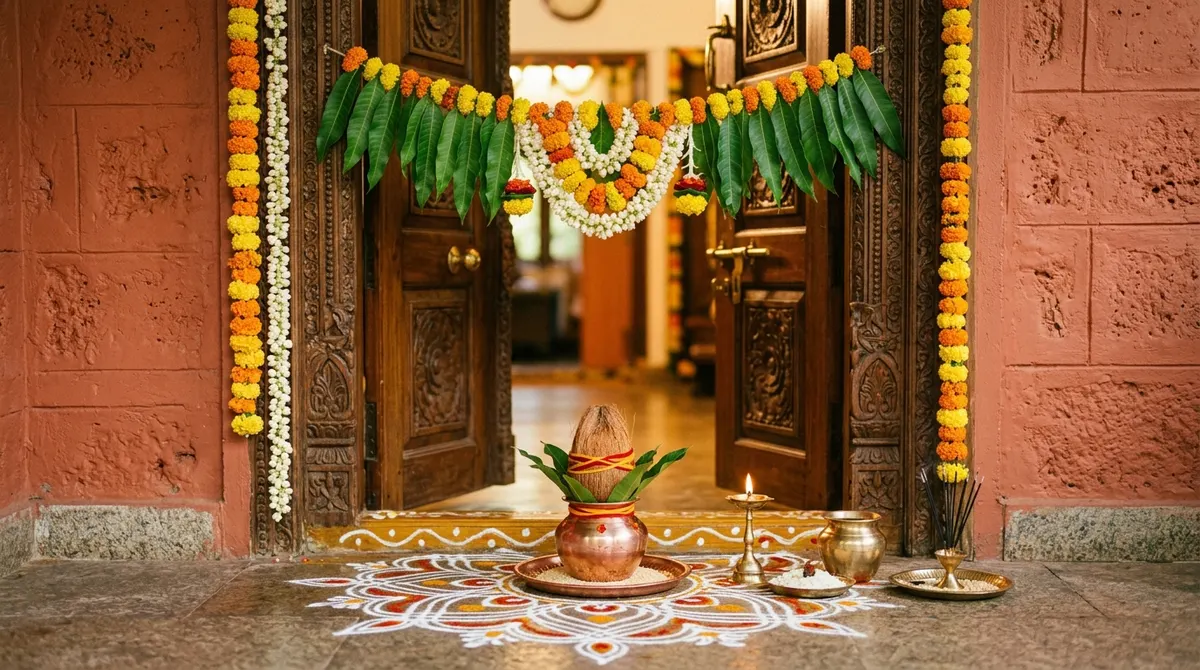
Good preparation makes the ceremony calm and smooth. The house should be fully cleaned, with construction dust removed, floors mopped, and the main entrance decorated with mango or ashoka leaves, marigold flowers, and a toran, a traditional hanging garland for the doorway. A swastik symbol drawn with turmeric or kumkum, red vermilion powder, at the entrance is considered auspicious in many North Indian homes. The kitchen area should be ready because boiling milk until it overflows is a central custom that symbolises abundance in the new home.
Keep the pooja area ready in the living room or in the northeast corner of the house, which tradition regards as the ishanya corner linked with clarity and prayer. Spread a clean cloth or mat, arrange the samagri, sacred worship materials, in trays, and keep drinking water, fruits, flowers, and prasad, sanctified food offering, separately. Family members are usually asked to bathe, wear clean traditional clothes, and keep the morning free of rush. If elders or children are attending, arrange seating, ventilation, and drinking water in advance so everyone can sit comfortably through the chanting and havan, the sacred fire ritual.
Griha pravesh pooja vidhi step by step
The ceremony generally follows a clear sequence, though the exact order and choice of mantras may differ slightly between Vedic schools. First comes swasti vachan, auspicious opening verses, followed by Ganesh pooja to seek a smooth beginning. Then the pandit performs kalash sthapana, installation of a sacred water vessel, in which a coconut is placed over a metal pot filled with water, mango leaves, and coins. The kalash, the sacred pot, is regarded as a seat for divine energies during the pooja. After this the family takes sankalp, holding water, flowers, and rice in the palm while the pandit speaks the intention, names, and purpose of the ceremony on their behalf.
Next come the main worship segments. These usually include Navagraha pooja for the nine planets, Vastu pooja for the dwelling, and chanting of protective verses. A widely used opening verse is the Ganapati invocation in Devanagari plus transliteration for correct pronunciation. The pandit then performs havan by offering ghee, clarified butter, grains, and herbs into the fire with Svaha chants while the family repeats or listens with folded hands. Finally the family performs aarti, the waving of a lit lamp before the deities, boils milk in the kitchen, offers food to the deities, and distributes prasad to everyone present.
- Ganesh pooja and swasti vachan for an obstacle free start
- Kalash sthapana with water, mango leaves, coconut, and coins
- Sankalp by the head of the family with the pandit guidance
- Navagraha and Vastu pooja with flowers, rice, and sandal paste
- Havan with ghee, samidha wood sticks, and grain offerings
- Aarti, milk boiling in the kitchen, and prasad distribution
Important mantras used in the ceremony
Mantras in this ceremony are traditional Sanskrit verses that invite focus, gratitude, and a sense of the sacred. Only well-known verses are quoted here, and your pandit will choose the full set based on your family tradition. A common Ganesh invocation is written in Devanagari as ॐ गणानां त्वा गणपतिं हवामहे, with transliteration as Om Gananam Tva Ganapatim Havamahe, meaning we invoke Ganapati, the lord of groups and beginnings. Another widely heard verse for wellbeing is ॐ सह नाववतु सह नौ भुनक्तु, transliterated as Om Saha Navavatu Saha Nau Bhunaktu, meaning may we be protected and nourished together.
Correct pronunciation, rhythm, and sequence matter in Vedic chanting, which is one reason families prefer a trained pandit rather than reading verses alone. The pandit knows where to pause, how to pronounce each syllable, and which verse belongs to which offering in the fire. Family members are usually asked to repeat short lines, offer flowers or rice at the right moment, and remain seated with attention. Children can participate by holding flowers, ringing a small bell during aarti, or helping distribute prasad, which makes the ceremony joyful and memorable for the whole family.
Milk boiling and first entry customs
Boiling milk in the new kitchen is one of the most loved customs of the day. After the main pooja and havan, the lady of the house or the couple together boils milk in a new vessel until it rises and overflows slightly. This overflow is traditionally seen as a sign of abundance and growth in the new home. The milk is then offered first to the deities and later shared as prasad. Some families also cook rice or prepare kheer, sweet rice pudding, on the same stove to mark the start of the kitchen.
Regional customs around first entry differ and add local colour to the day. In many North Indian homes the couple enters with the right foot first, carrying the kalash water or a small Ganesh idol, while elders shower rice grains as blessing. Some families keep a cow or its image near the entrance for respect, while others bring a Tulsi plant for the balcony or courtyard. Apartment dwellers can adapt these customs simply by keeping the entrance clean, using a small havan kund, fire vessel, on the balcony where smoke can escape, and confirming society rules for fire and smoke in advance.
Practical checklist for a smooth ceremony
A practical checklist helps the day stay peaceful, especially when guests, photographers, and shifting workers are all present. Confirm the date and arrival time with the pandit two or three days earlier, share your exact address and parking details, and ask how long the ceremony will take so you can plan meals and travel. Keep the samagri sorted in labelled trays the night before, charge your phone for photos, and keep a bucket of water, a mat under the havan kund, and a first aid cloth nearby for safety. If the ceremony falls in summer, arrange fans and drinking water near the seating area.
Assign one family member as coordinator so the pandit is not interrupted with house questions during chanting. This person can receive guests, manage the milk boiling, handle the doorbell, and keep children engaged. Keep payment covers, dakshina, traditional offering to the pandit, fruits for distribution, and extra bags for prasad ready in one corner. After the pooja, ventilate the rooms, wipe any soot marks near the havan area, store leftover ghee and grains cleanly, and note any vessels you borrowed so they can be returned promptly.
- Cleaned house, decorated entrance, toran and rangoli ready
- Pooja space with mats, low table, kalash, idols, and lamps
- Full samagri tray, fruits, flowers, milk, ghee, and prasad
- Matchbox, havan kund, dry wood, camphor, and water bucket
- Clean clothes for family, seating, fans, and drinking water
- Dakshina cover, prasad bags, and coordinator assigned for guests
Why an experienced pandit matters
An experienced pandit brings much more than chanting. He or she understands the full sequence, selects the correct sankalp for your situation, adjusts for regional custom, manages the timing of havan offerings, and guides each family member on what to do and when. This guidance matters because griha pravesh combines several worship segments in one sitting, and a small error in sequence or pronunciation can cause confusion or delay. A calm and organised pandit keeps the ceremony moving, explains each step in simple language, and ensures elders and children feel included rather than lost.
Divyanushthan connects families with verified Vedic pandits who can guide the family through preparation, explain the meaning of each step, and help arrange samagri so nothing important is missed on the morning of the pooja. The pandit can join at your home for the full ceremony or guide parts of it online where an in person visit is not possible, depending on the service you choose. Families are encouraged to ask questions in advance about duration, items to keep ready, and seating needs. With the right guidance, the day feels less like event management and more like a warm family prayer that truly welcomes everyone into the new home with peace and gratitude.
Want this ritual done the authentic way?
Book a Pandit for Griha PraveshFrequently Asked Questions
How long does a griha pravesh pooja take at home?
Most home ceremonies take about two to four hours including Ganesh pooja, kalash sthapana, Navagraha and Vastu pooja, havan, aarti, and milk boiling. The exact time depends on the pandit tradition, the number of offerings, and family participation. Ask your pandit for an estimate while booking so you can plan meals and guest arrival.
Can we do griha pravesh pooja in a rented flat or apartment?
Yes, the ceremony can be adapted for rented flats and apartments. Use a small havan kund, keep ventilation open, inform your housing society about brief smoke from the fire, and focus on kalash sthapana, sankalp, Ganesh and Vastu pooja, a short havan, aarti, and milk boiling in the kitchen.
What should we do if we cannot get the ideal muhurat date?
Speak with your pandit about the next suitable day rather than skipping the ceremony. In practice pandits suggest the nearest auspicious window and adjust the sankalp accordingly. Avoid rushing into an incomplete ceremony, and complete cleaning and basic setup before the pooja day.
Who should take sankalp during griha pravesh?
Usually the head of the family or the couple who owns or will live in the home takes sankalp, holding water, flowers, and rice while the pandit chants. Other family members place a hand on the shoulder or join with folded hands. The pandit will guide you on names, gotra details if known, and wording.
Is havan compulsory in every griha pravesh?
Havan is highly recommended in North Indian tradition and is part of most complete ceremonies, but the size can be adjusted. For small apartments or health concerns, the pandit may perform a short havan with fewer offerings. Discuss smoke, space, and elderly family needs with the pandit in advance.
Related guides
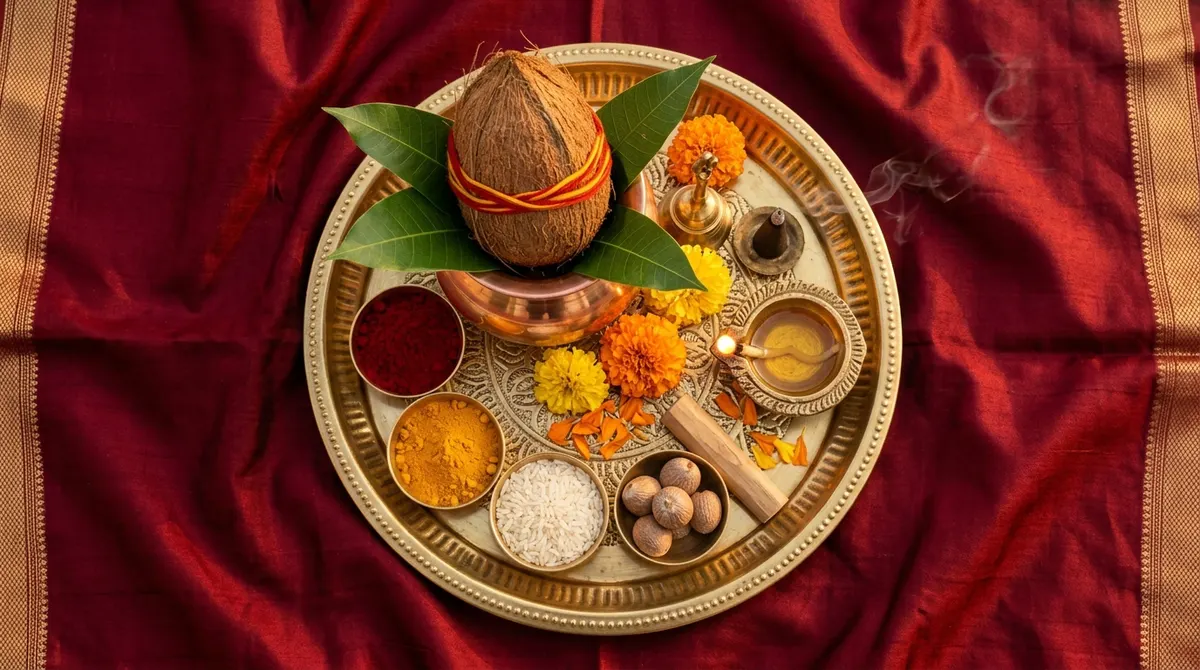 RitualsGriha Pravesh Samagri List: Full ChecklistA practical griha pravesh samagri list with everything for kalash, pooja, havan, and kitchen customs, plus packing and shopping tips.7 min read
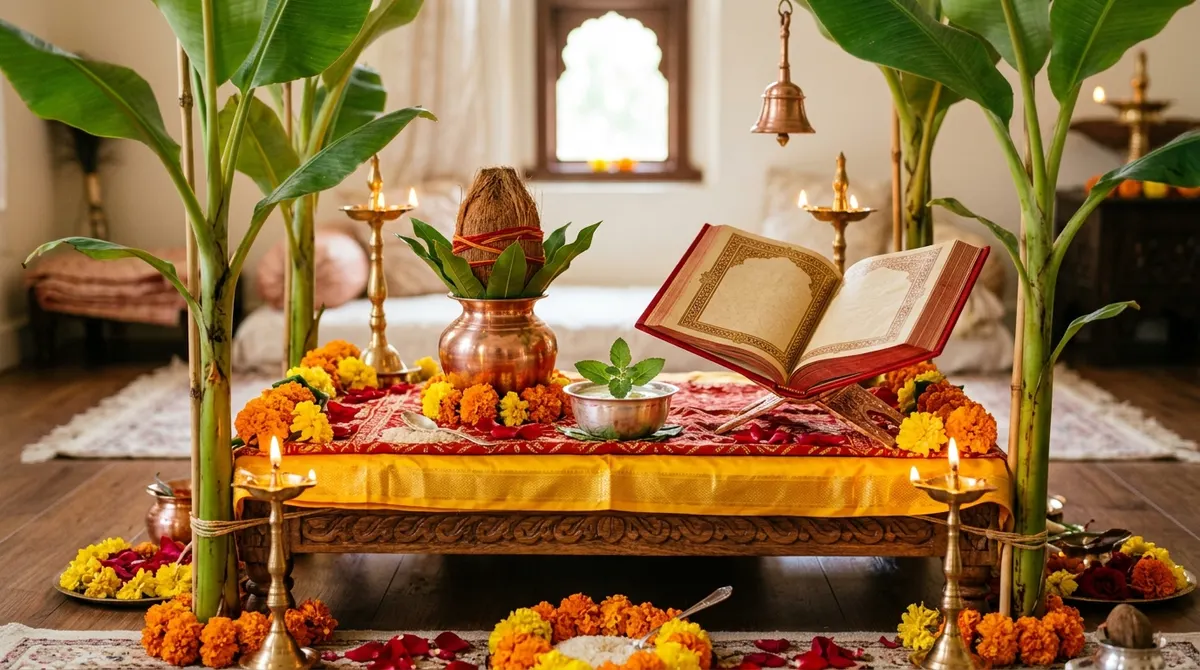 RitualsSatyanarayan Katha Vidhi: Complete GuideA simple guide to satyanarayan katha vidhi with preparation, pooja steps, story meaning, and prasad tips for families.7 min read
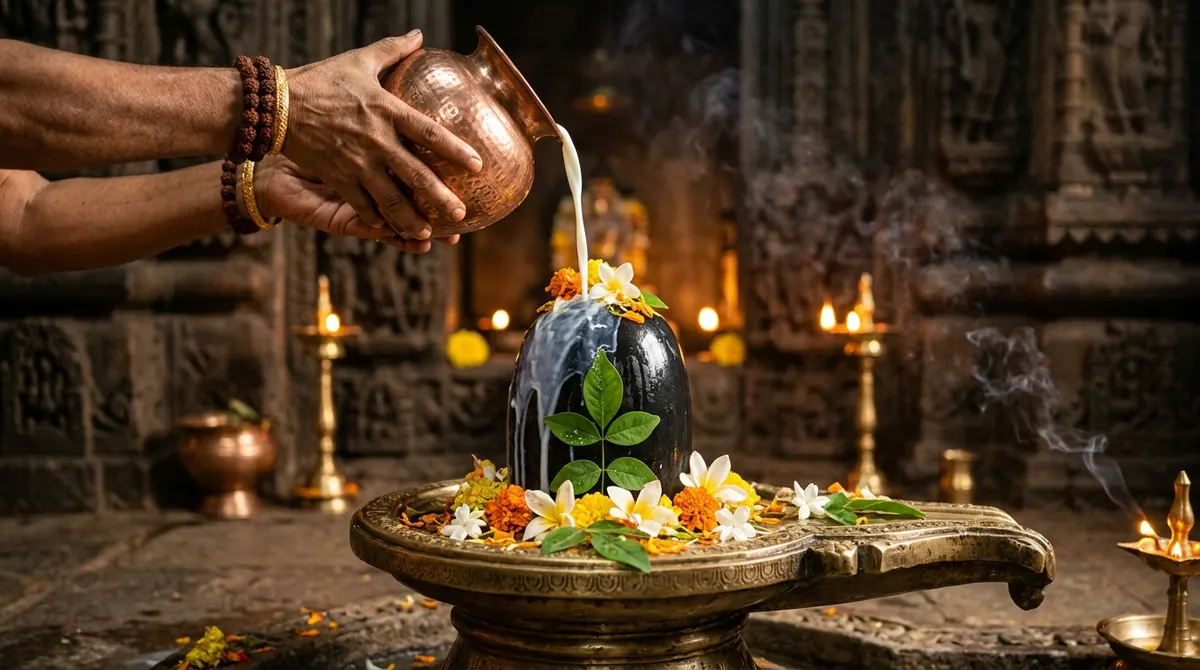 RitualsRudrabhishek Pooja Vidhi and Samagri: Complete GuideA complete, practical guide to rudrabhishek puja vidhi and samagri, explaining each step clearly for home performance with a trained pandit.8 min read