Satyanarayan Katha Vidhi: Complete Guide
In this guide
What is satyanarayan katha vidhi
The satyanarayan katha vidhi is a devotional worship of Lord Vishnu in his form as Satyanarayan, the embodiment of truth and goodness. Katha means sacred story, and vidhi means the correct method, so this ceremony combines prayer, storytelling, and prasad sharing in one sitting. Families perform it to express gratitude after a happy event such as a new home, marriage, childbirth, new job, or recovery from illness, and also on full moon days known as purnima, which are traditionally linked with worship and reflection.
According to common North Indian practice, the ceremony is simple and joyful, with no strict fasting rules for all members and no need for a large fire ritual. The pandit installs a kalash, the sacred water vessel, worships Lord Ganesh first, then worships Satyanarayan with flowers, fruits, and panchamrit, the five item sacred mixture. The heart of the ceremony is the listening of five chapters of stories that teach honesty, humility, and keeping promises. Regional texts and language of the katha may differ, and Maharashtrian, Gujarati, and South Indian families may follow slightly different books, but the meaning and sequence remain broadly similar.
Want this ritual done the authentic way?
Book Satyanarayan KathaWhen and why families perform it
Families choose this pooja for both happy occasions and times of reflection. Common occasions include housewarming, birthdays, anniversaries, start of a new business, before long travel, after completing a vow, or simply on purnima for family peace. Tradition describes benefits such as mental peace, family harmony, and clarity of purpose as matters of faith, not as guaranteed outcomes. The ceremony works best when viewed as a moment to pause, thank the divine, and renew good intentions together.
Timing is usually flexible. Morning or evening both suit the ceremony, and many families prefer evening so working members and neighbours can attend the katha and aarti. The full ceremony usually takes two to three hours including setup, pooja, story narration, aarti, and prasad. If elders or small children are attending, plan seating, water, and a quiet room for rest. Speak with your pandit about the date, language of narration, and whether you wish the stories in Sanskrit with Hindi explanation or fully in simple Hindi.
Preparation and setup at home
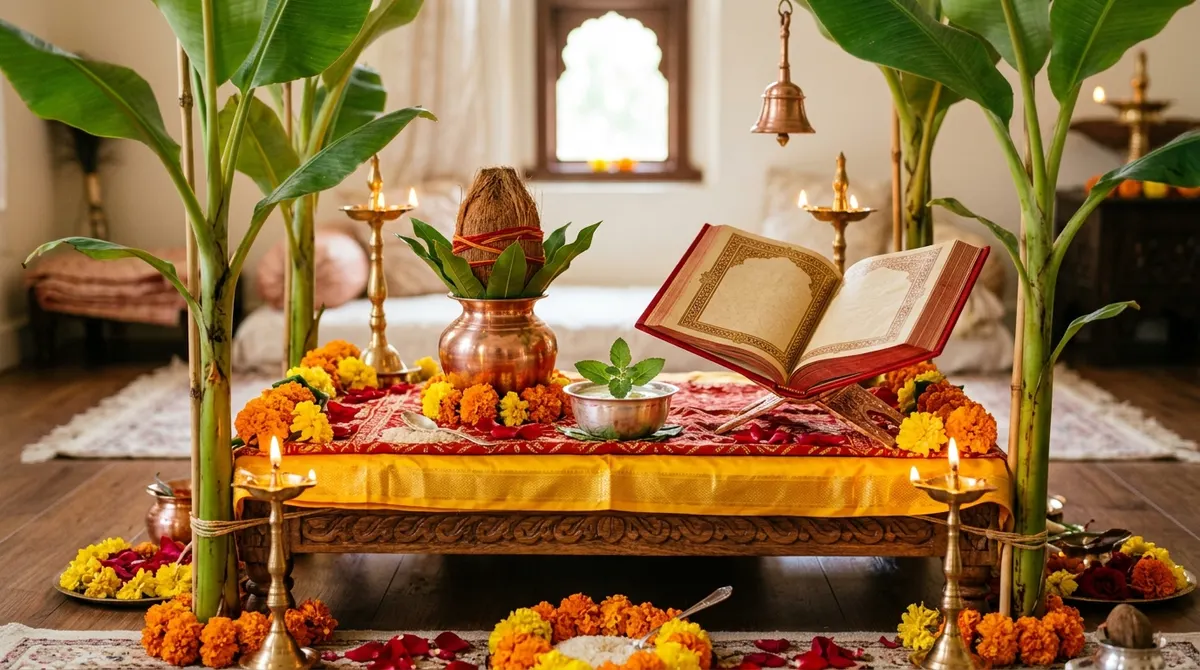
Preparation is simple and can be finished in one morning. Clean the pooja room or living room, spread a clean cloth on a low platform, and place a framed image or small idol of Lord Satyanarayan or Vishnu along with Lord Ganesh. Keep a brass or steel kalash pot with water, mango leaves, coconut, coins, and red cloth ready for sthapana, installation. Decorate the area with marigold flowers, mango leaf toran, traditional door hanging, and two oil lamps.
Seat the main couple or family head near the pandit with enough space for the katha book, prasad bowls, and offering plates. Keep drinking water, extra mats for guests, and fans ready in warm weather. Ask guests to arrive fifteen minutes early so the sankalp, the formal statement of intention, can begin on time with everyone seated. Keep phones silent during the story so the narration remains the focus. A calm and tidy space helps listeners absorb the meaning of each chapter without distraction.
Satyanarayan katha vidhi step by step
The satyanarayan katha vidhi follows a gentle sequence that the pandit guides throughout. It begins with swasti vachan, auspicious opening verses, and Ganesh pooja for a smooth start. Then comes kalash sthapana and sankalp, where the family holds water, flowers, and rice while the pandit speaks their names and purpose. Next the pandit performs shodashopachar pooja, the sixteen step honouring of the deity, with flowers, sandal paste, rice, fruits, incense, lamps, and food offerings, while chanting Vishnu names and verses.
After the main worship, the pandit narrates the five chapters of the katha one by one, with short prayers and flower offerings between chapters. Listeners are traditionally asked to stay seated, listen with attention, and offer rice or flowers when invited. A well-known chant heard here is ॐ नमो भगवते वासुदेवाय, transliterated as Om Namo Bhagavate Vasudevaya, meaning salutation to Vasudeva, the all pervading Lord. The ceremony closes with aarti, the waving of lamps, distribution of charnamrit, sanctified liquid, and prasad, and blessings for all present.
- Ganesh pooja and swasti vachan for an auspicious opening
- Kalash sthapana and sankalp with the family intention
- Shodashopachar pooja of Lord Satyanarayan with sixteen offerings
- Narration of five katha chapters with flower offerings
- Aarti, charnamrit, prasad distribution, and blessings
Meaning of the five katha chapters
The stories are simple parables, not history lessons, and each one carries a practical moral for daily life. The first chapter explains the origin of the vow and how sincere devotion matters more than wealth or status. The second and third chapters describe how keeping promises and speaking truthfully bring peace of mind, while pride or neglect of duty creates trouble. Later chapters show characters correcting mistakes through repentance, charity, and renewed worship. Your pandit will explain each part in plain language so children and first time listeners can follow.
The key message across all chapters is steady and comforting. Tell the truth, honour your word, share food and help with others, and remain humble in success. Families often discuss one lesson after the ceremony, such as keeping a promise made to elders or helping a neighbour in need. This reflection turns the katha from a ritual into a family value exercise. Guests from different regions may know slightly different versions of the stories, which is normal, and the pandit can note where versions differ without confusing the listeners.
Prasad, panchamrit, and food customs
Prasad is central to this ceremony and is prepared with care. The classic offering is the soft halwa style prasad made of wheat flour, ghee, sugar, banana, and dry fruits, mixed after offering and shared with all. Panchamrit is prepared separately by mixing milk, curd, ghee, honey, and sugar with tulsi leaves, and a spoonful is given to each person as charnamrit. Keep fruits such as banana, apple, and coconut, betel leaves, betel nuts known as supari, and coins for offering during the pooja.
Prepare prasad fresh on the day in a clean kitchen after bathing, and keep it covered until the offering moment. Make enough for all guests plus a few extra packs, since neighbours often join for aarti. Keep steel bowls, spoons, water glasses, and carry bags ready for distribution. If anyone has allergies to milk, nuts, or gluten, keep fruit prasad separate and inform guests clearly. After the ceremony, share prasad the same day and avoid storing panchamrit overnight.
- Wheat flour, ghee, sugar, banana, dry fruits for prasad halwa
- Milk, curd, ghee, honey, sugar, tulsi for panchamrit
- Fruits, coconut, betel leaves, supari, coins, flowers
- Bowls, spoons, glasses, and bags for prasad distribution
Practical checklist for hosts
Hosting becomes easy with a short checklist completed the night before. Confirm the pandit arrival time, parking, language of katha, and expected duration. Arrange the pooja platform, kalash items, idols, lamps, incense, camphor, matchboxes, flowers, fruits, prasad ingredients, and extra seating. Keep the katha book ready if your family owns one, though most pandits bring their own copy. Test fans, lights, and sound so elderly guests can hear the narration clearly.
Assign simple duties to family members so the host can sit for sankalp without interruption. One person can welcome guests, one can manage prasad packing, and one can handle photos quietly from the side without flash during chanting. Keep dakshina, traditional offering to the pandit, fruits, and a return gift bag ready in one corner. After aarti, ventilate the room, wipe lamp areas, store leftover dry items cleanly, and thank guests personally. A warm and organised close leaves everyone with a good memory of the evening.
Why an experienced pandit matters
An experienced pandit makes the katha clear, correct, and engaging. Correct sequence, clear pronunciation, and simple explanation matter because the ceremony blends Sanskrit verses with long story passages. A trained pandit knows where to pause, how to explain each chapter in everyday language, and how to involve children and elders without rushing. He or she also handles sankalp wording, kalash setup, and offering order smoothly, so the family feels guided rather than confused.
Divyanushthan pandits can guide the family before the day on what to buy, how to arrange the pooja space, and how long the ceremony will take, and they help arrange samagri so nothing is missed. The pandit can perform the full satyanarayan katha vidhi at home or guide parts of it online where an in person visit is not possible, based on the service chosen. No guaranteed outcomes are promised, since tradition views peace and wellbeing as blessings received with faith and good conduct. With kind guidance and complete preparation, the family can listen, pray, and share prasad with full attention and joy.
Want this ritual done the authentic way?
Book Satyanarayan KathaFrequently Asked Questions
How long does Satyanarayan katha take at home?
Most home ceremonies take two to three hours including Ganesh pooja, kalash sthapana, main worship, five katha chapters, aarti, and prasad. Evening slots are popular so family and neighbours can attend. Confirm duration with your pandit while booking.
Do we need to fast for Satyanarayan pooja?
Strict fasting is not required for all members in common practice. Many families eat light vegetarian food before or after the ceremony and avoid onion, garlic, and alcohol on the day out of respect. Follow your family custom and the kind guidance of your pandit.
Can we perform the katha on any day or only purnima?
Purnima is traditional and popular, but families also perform it on ekadashi, weekends, or happy occasions like housewarming and birthdays. Choose a day when the whole family can sit together, and confirm with your pandit if you want a specific auspicious time.
What language is the katha narrated in?
Pandits often chant verses in Sanskrit and explain stories in Hindi or the local language. Ask in advance if you prefer simple Hindi, English explanation, or a regional version. This helps children, elders, and guests follow the meaning of each chapter.
How much prasad should we prepare?
Prepare enough halwa prasad and panchamrit for all invited guests plus a small extra for neighbours who may join for aarti. Fruit prasad can be kept separate for those with allergies. Share prasad the same day for freshness.
Related guides
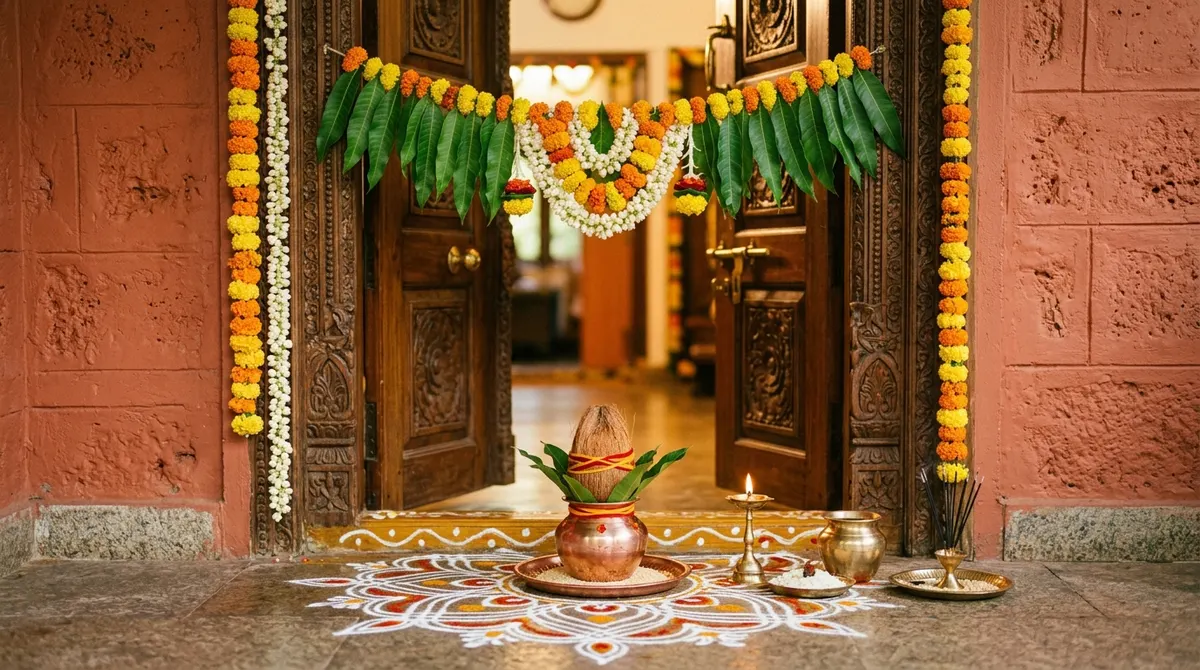 RitualsGriha Pravesh Pooja Vidhi: Steps for New HomeA clear step by step guide to griha pravesh pooja vidhi for entering a new home with Vedic prayers, havan, and family participation.7 min read
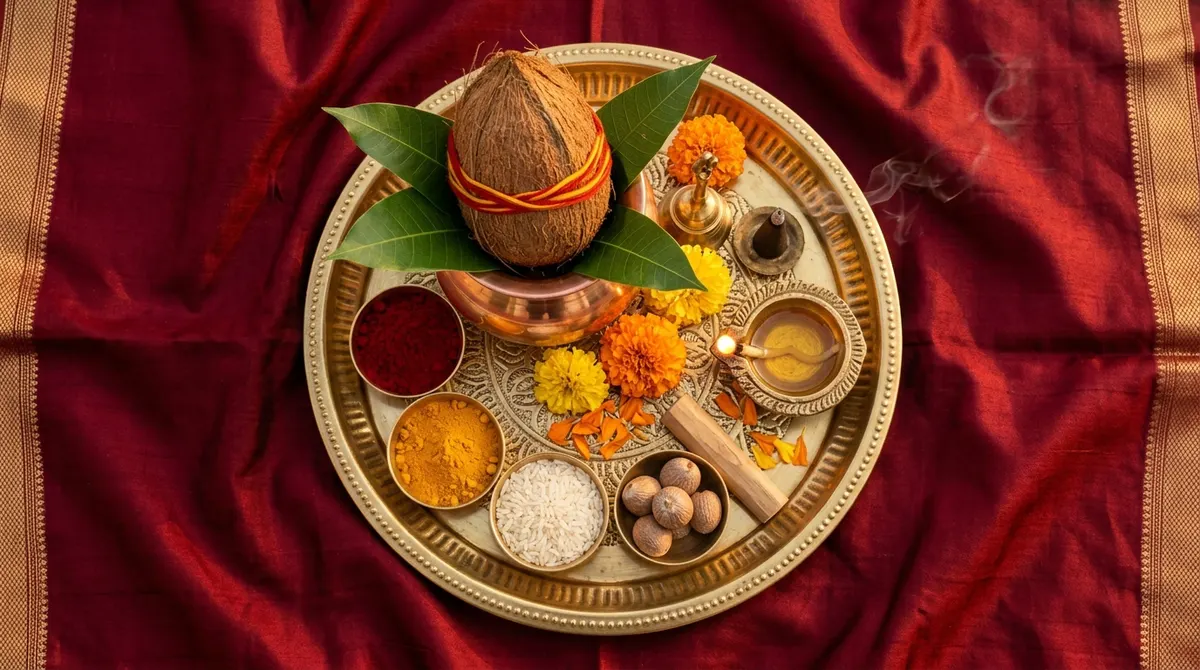 RitualsGriha Pravesh Samagri List: Full ChecklistA practical griha pravesh samagri list with everything for kalash, pooja, havan, and kitchen customs, plus packing and shopping tips.7 min read
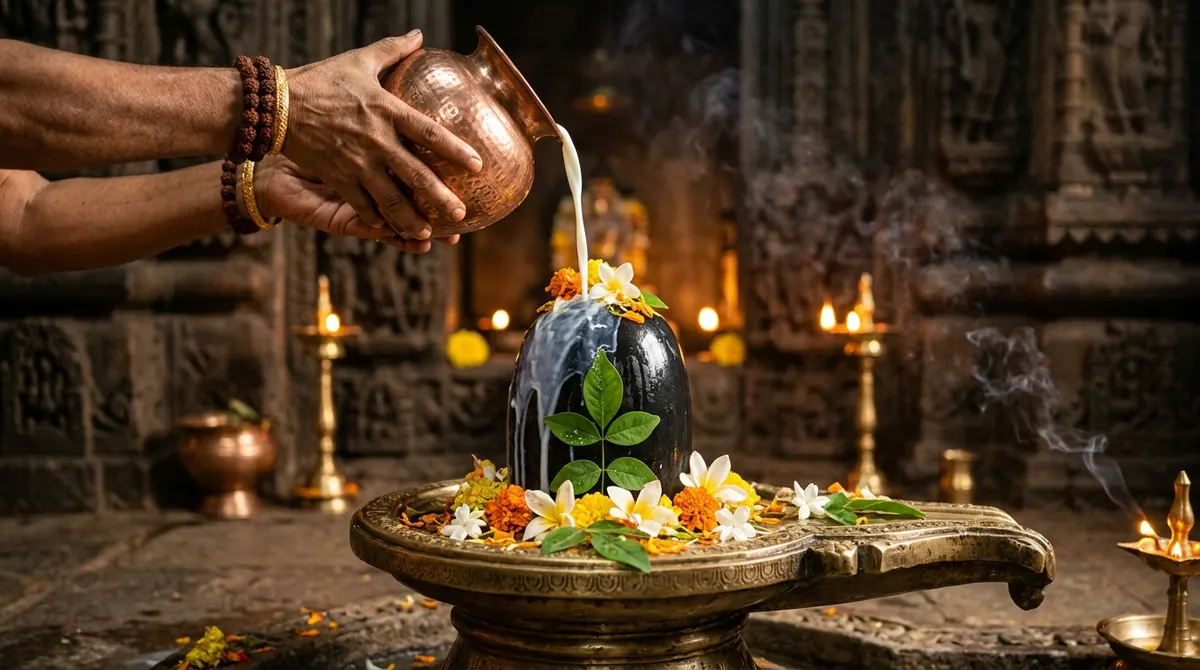 RitualsRudrabhishek Pooja Vidhi and Samagri: Complete GuideA complete, practical guide to rudrabhishek puja vidhi and samagri, explaining each step clearly for home performance with a trained pandit.8 min read