Kaal Sarp Dosh Nivaran: Meaning, Vidhi and Sacred Places
In this guide
- 1. What Kaal Sarp Dosh Nivaran Means in Jyotish
- 2. How the Kaal Sarp Yoga Forms in a Kundli
- 3. Why Trimbakeshwar and Ujjain Are Traditional Places
- 4. Can Kaal Sarp Dosh Nivaran Be Done at Home?
- 5. Step-by-Step Vidhi Outline for the Ritual
- 6. Mantra and Samagri for Nivaran
- 7. Benefits as Traditional Belief
- 8. Practical Checklist Before You Travel or Book
- 9. Why an Experienced Pandit Matters
What Kaal Sarp Dosh Nivaran Means in Jyotish
Kaal sarp dosh nivaran refers to rituals performed to seek relief from the effects that Jyotish associates with the Kaal Sarp yoga — a chart configuration rather than a curse. The yoga forms when all seven classical planets (Surya through Shani) fall between Rahu and Ketu in the birth chart, so the grahas appear "hemmed in" by the serpent axis of the two lunar nodes. The name sounds dramatic, but mainstream Jyotish treats it as one configuration among many, and its reading depends heavily on the lagna (ascendant), the house placements, the running dasha (planetary period) and the strength of other planets in the same kundli.
Importantly, traditions differ on how seriously the yoga is taken. Many respected astrologers note that a large percentage of charts contain it, that it can coincide with periods of intense effort and transformation, and that it is greatly reduced when certain conditions are present. This is why a qualified astrologer should read the full kundli before any remedy is prescribed. Kaal sarp dosh nivaran is best approached as a devotional practice for peace of mind — never as insurance against misfortune, and with no guaranteed results.
Want this ritual done the authentic way?
Get Your Kundli Checked (Vedic Life Audit)How the Kaal Sarp Yoga Forms in a Kundli
To understand the ritual, it helps to understand the chart pattern it addresses. Rahu (the north lunar node) and Ketu (the south node) are always exactly opposite each other. When every other planet sits in the arc between them, the classic Kaal Sarp configuration is formed. Traditional texts describe twelve named varieties based on which bhava (house) Rahu occupies, each named after a serpent: Anant, Kulik, Vasuki, Shankh, Padma, Mahapadma, Takshak, Viprachit, Bhujang, Nag, Vishdhar and Shesh. Astrologers read the specific variety because the house placement points to the life area most affected — though the simplified descriptions below are only an entry point, and the yoga is always judged with the whole chart, including whether it is cancelled or weakened.
- Rahu in the 1st house: Anant Kaal Sarp — emphasis on self, health and identity.
- Rahu in the 2nd and 3rd houses: Kulik and Vasuki — family wealth and courage/career respectively.
- Rahu in the 4th and 5th houses: Shankh and Padma — home, mother, education and children.
- Rahu in the 6th and 7th houses: Mahapadma and Takshak — health, rivals and marriage/partnerships.
- Rahu in the 8th and 9th houses: Viprachit and Bhujang — longevity, obstacles and fortune.
- Rahu in the 10th, 11th and 12th houses: Nag, Vishdhar and Shesh — career, gains and liberation.
Why Trimbakeshwar and Ujjain Are Traditional Places
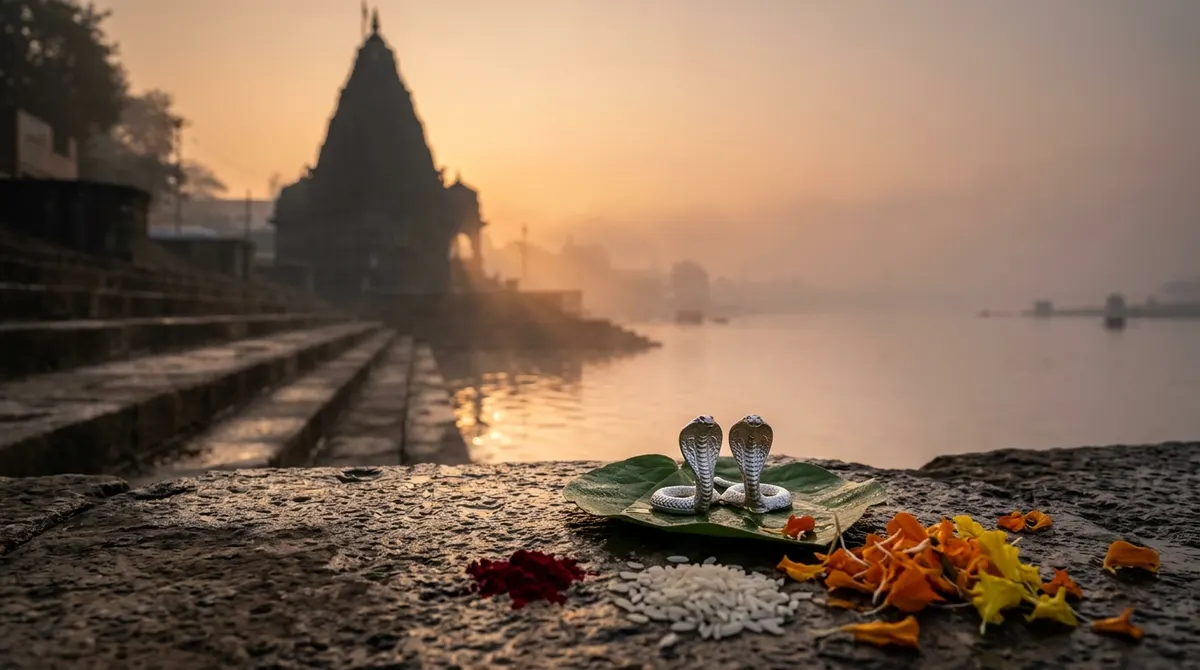
Families across India commonly travel for kaal sarp dosh nivaran because certain tirthas (pilgrimage centres) are traditionally associated with the ritual. Trimbakeshwar, near Nashik in Maharashtra, is home to the Trimbakeshwar Jyotirlinga, and the town is strongly associated with the Tryambakam mantra — the very mantra chanted for relief and liberation that also appears in the Mahamrityunjay tradition. Because of this link, many families regard Trimbakeshwar as the natural setting for a full-scale nivaran ceremony with extended mantra jaap.
Ujjain, in Madhya Pradesh, is home to the Mahakaleshwar Jyotirlinga and is one of the seven sacred cities (Sapta Puri) of Hindu tradition. Its long history as a centre of Vedic learning, Jyotish scholarship and ritual performance — including the ancient observatory and its association with the zodiac — makes it a natural home for graha-related rites. Both cities host established pandits who perform these ceremonies daily for visiting families. Regional variation exists: some families also perform nivaran rituals at local Navgrah shrines, at their family kuladevata temple, or simply at home.
Can Kaal Sarp Dosh Nivaran Be Done at Home?
Yes — a qualified pandit can perform kaal sarp dosh nivaran at home if your family prefers it, and many families choose this for elderly members who cannot travel. The core elements travel with the pandit: kalash sthapana, sankalp, invocation of Shiva and the nagas, mantra jaap, and an offering. What changes is scale. A traditional tirtha ceremony often involves multiple pandits chanting together over a longer period, a larger havan, and ritual bathing of the shaligram or Shivling — elements that are difficult to replicate in a city apartment.
Before deciding, discuss three practical points with your pandit: how many people can attend, whether the family wants the extended jaap or a shorter form, and whether local custom requires a temple visit afterwards. A home ceremony followed by a temple visit is a common compromise; for full traditional scale, travelling to Trimbakeshwar or Ujjain remains customary. Either way, confirm the vidhi in advance so samagri and seating can be arranged properly.
- Home: convenient, inclusive for elders, shorter form, one pandit.
- Temple nearby: adds a sacred setting without long-distance travel.
- Tirtha (Trimbakeshwar/Ujjain): full-scale traditional ceremony, requires travel planning.
- Hybrid: home puja first, temple visit later — common among diaspora families.
Step-by-Step Vidhi Outline for the Ritual
Ceremonies vary by sampradaya (lineage) and city, but the following sequence reflects the vidhi commonly followed for nivaran rituals in North Indian tradition. Your pandit will adjust the mantras and count to the specific form your family chooses:
- Snana and achaman: ritual bathing and purification of the participants and the space.
- Ganesh and Shiv Pooja: invoking Lord Ganesh, then worshipping Lord Shiva, to whom the tradition connects this ritual.
- Kalash Sthapana: establishing the kalash (sacred pot) with water, mango leaves and coconut.
- Sankalp: stating the intention — place, date, names and gotra if known, and the purpose of the nivaran.
- Nag Devata and Rahu-Ketu worship: honouring the serpent deities and the two nodes with flowers and tilak.
- Mantra Jaap: chanting the prescribed mantra a set number of times on a mala; the Tryambakam mantra is often included at Trimbakeshwar.
- Havan: offering ghee and samagri into the sacred fire with repeated mantras.
- Aarti, Prasad and Dakshina: closing with aarti, distributing prasad and offering dakshina to the pandit.
Mantra and Samagri for Nivaran
Mantra chanting is central to the ceremony. The Tryambakam (Mahamrityunjay) mantra, one of the best-known Vedic mantras, is traditionally associated with Trimbakeshwar and frequently recited during these ceremonies:
ॐ त्र्यम्बकं यजामहे सुगन्धिं पुष्टिवर्धनम्। उर्वारुकमिव बन्धनान्मृत्योर्मुक्षीय मामृतात्॥
Transliteration: Om Tryambakam Yajamahe Sugandhim Pushtivardhanam Urvarukamiva Bandhanan Mrityormukshiya Mamritat.
Rahu and Ketu bija mantras are also commonly chanted as part of the graha worship. On samagri, the pandit will supply a written list, but the standard requirements are:
- Kalash, water, mango leaves, coconut and a red cloth
- Shivling or shaligram for abhishek (ritual bathing), or a Shiv image if unavailable
- Flowers, akshat (unbroken rice), bilva leaves for Lord Shiva
- Havan kund, havan samagri, ghee and dry wood
- Incense, diya, camphor and bell for aarti
- Fruits and simple vegetarian prasad; sometimes sesame and jaggery for pitru-related offerings
- A mala for the jaap count, and dakshina for the pandit
Benefits as Traditional Belief
In traditional belief, performing kaal sarp dosh nivaran is said to reduce the strain associated with the yoga and bring mental peace, clarity and a sense of protection to the family. Devotees often describe feeling more settled after the ceremony, and the family usually values the gathering itself — relatives coming together, elders blessing the younger members, and everyone participating in a shared ritual. These are deeply held beliefs passed down through generations and should be understood as such: no ritual can promise a specific worldly outcome, and no puja replaces personal effort, good judgement or professional medical and financial advice. The tradition itself teaches that sincere devotion and righteous conduct carry the deepest weight.
Practical Checklist Before You Travel or Book
A little planning keeps the ceremony focused and stress-free:
- Get the full kundli read by a qualified astrologer before committing to any nivaran
- Confirm with the astrologer whether the yoga is actually present and not cancelled
- Decide home, local temple or tirtha based on family logistics
- Fix the muhurat with the pandit; do not rely on generic online calendars
- Ask for a written samagri list and arrange it the day before
- Keep names, gotra and birth details ready for the sankalp
- Plan travel, accommodation and darshan timings if going to Trimbakeshwar or Ujjain
- Allow time after the ceremony for prasad distribution and rest
Why an Experienced Pandit Matters
The Kaal Sarp ritual combines Shiva worship, graha worship and long mantra jaap, and its quality depends on precise sankalp, correct pronunciation and the right sequence. An experienced pandit also brings judgement that a script alone cannot: they know the local tradition of the tirtha, can adapt the length of the ceremony to your family's time and budget constraints, and will tell you honestly if the reading does not call for the ritual. Misinformation about this yoga is widespread online, and families often arrive frightened; a knowledgeable priest calmly puts the configuration in proportion.
Divyanushthan connects families with verified Vedic pandits who can first help you understand the kundli through the Vedic Life Audit, then guide you through every step of the ceremony — whether at home or in a traditional tirtha — and help arrange the samagri in advance. With proper guidance, the ritual becomes what the tradition intends it to be: a focused, devotional observance that brings the family together in peace.
Want this ritual done the authentic way?
Get Your Kundli Checked (Vedic Life Audit)Frequently Asked Questions
What exactly is kaal sarp dosh?
It is a Jyotish chart configuration in which all seven classical planets fall between Rahu and Ketu. It is a yoga, not a curse, and mainstream astrologers read it together with the whole kundli — many charts contain it and it can be reduced or cancelled by other factors.
Should I perform kaal sarp dosh nivaran?
Not automatically. A qualified astrologer should read the full kundli before any remedy is prescribed. If the yoga is present and the astrologer advises it, nivaran can be performed as a devotional practice for peace of mind; if not, there is no harm in skipping it.
Why do people go to Trimbakeshwar and Ujjain for it?
Trimbakeshwar (near Nashik) hosts the Trimbakeshwar Jyotirlinga, traditionally linked with the Tryambakam mantra, and Ujjain hosts Mahakaleshwar and has a long history as a centre of Vedic and Jyotish learning. Both are customary tirthas for full-scale nivaran ceremonies, though local temples are also common.
Can kaal sarp dosh nivaran be done at home?
Yes. A pandit can perform a shortened form at home with kalash, sankalp, mantra jaap and havan. What a tirtha adds is scale — multiple chanting pandits and a larger ritual space — not a different fundamental vidhi.
Does performing the puja guarantee the problems will go away?
No ritual carries guaranteed results. Traditional belief holds that the ceremony brings peace and reduces the strain attributed to the yoga, but outcomes depend on effort, circumstances and many other factors. Treat it as a devotional practice, not a substitute for practical action.
Related guides
 RitualsGriha Pravesh Pooja Vidhi: Steps for New HomeA clear step by step guide to griha pravesh pooja vidhi for entering a new home with Vedic prayers, havan, and family participation.7 min read
 RitualsGriha Pravesh Samagri List: Full ChecklistA practical griha pravesh samagri list with everything for kalash, pooja, havan, and kitchen customs, plus packing and shopping tips.7 min read
 RitualsSatyanarayan Katha Vidhi: Complete GuideA simple guide to satyanarayan katha vidhi with preparation, pooja steps, story meaning, and prasad tips for families.7 min read