Mahamrityunjay Jaap: Meaning of 108 vs 11,000 vs 1,25,000
In this guide
- 1. What is Mahamrityunjay Jaap
- 2. Mahamrityunjay Mantra: Meaning and Correct Form
- 3. Understanding Mahamrityunjay Jaap Counts
- 4. Sankalp for Mahamrityunjay Jaap
- 5. Preparations and Guidelines
- 6. Step by Step Vidhi for Mahamrityunjay Jaap
- 7. Benefits as Traditional Belief
- 8. Practical Tips and Checklist
- 9. Why an Experienced Pandit Matters
What is Mahamrityunjay Jaap
Mahamrityunjay Jaap is the repeated chanting of the Maha Mrityunjaya Mantra, also known as the Trayambakam Mantra, in praise of Lord Shiva. The word "Mahamrityunjaya" means "the great conqueror of death" in a symbolic sense — it is traditionally seen as a prayer for protection, healing, and liberation from fear. The mantra is found in the Rigveda and also appears in the Yajurveda, making it one of the most revered Vedic mantras. Families often perform this jaap during times of illness, for general wellbeing, or as a regular spiritual practice for peace of mind.
As per mainstream Hindu tradition commonly followed in North India, this jaap is performed with reverence and discipline. Regional variation exists in the method — some families include havan after jaap, others perform it with a mala (rosary) of rudraksha beads, and some do it as part of a larger Shiva pooja. It is important to note that the benefits described here are traditional beliefs, not medical claims or guarantees of specific outcomes.
Want this ritual done the authentic way?
Book Mahamrityunjay JaapMahamrityunjay Mantra: Meaning and Correct Form
The Maha Mrityunjaya Mantra is traditionally chanted in its original Sanskrit form. Here is the well-known version in Devanagari and transliteration for correct pronunciation:
ॐ त्र्यम्बकं यजामहे सुगन्धिं पुष्टिवर्धनम्। उर्वारुकमिव बन्धनान्मृत्योर्मुक्षीय मामृतात्॥
Transliteration: Om Tryambakam Yajamahe Sugandhim Pushtivardhanam Urvarukamiva Bandhanan Mrityormukshiya Mamritat.
In essence, this is a prayer to Lord Shiva (Tryambaka, the three-eyed one) to free the devotee from the bondage of death and lead them towards immortality. The analogy of the cucumber detaching from its vine symbolizes the soul being released from worldly attachments. Correct pronunciation and focus are essential, which is why guidance from an experienced pandit is highly recommended, especially for large counts.
Understanding Mahamrityunjay Jaap Counts
One of the most common questions is about the difference between 108, 11,000, and 1,25,000 jaap counts. Each count carries its own traditional significance, and the choice depends on time, devotion, and family tradition. It is not necessary to perform the highest count — even a sincere jaap with fewer repetitions holds meaning in traditional belief.
- 108 times: The most common daily or short-form jaap. The number 108 is considered sacred in Hinduism, representing cosmic harmony and the connection between the individual and the universe. Often performed with a mala of 108 beads.
- 11,000 times: A medium count, traditionally performed over several hours or spread across a day with proper breaks. Often done with sankalp for specific intentions under pandit guidance.
- 1,25,000 times: Known as a "purashcharan" level count in some traditions, requiring significant time, discipline, and preparation. Usually performed over multiple days with strict observance and under experienced guidance.
Sankalp for Mahamrityunjay Jaap
Sankalp is the formal statement of intention made at the beginning of the jaap. It is spoken by the person performing or by the head of the family, with the pandit guiding the words. The sankalp clarifies the purpose — for example, wellbeing of family members, recovery, peace, or general spiritual merit. Holding water, flowers, and rice in the palm while taking sankalp is the traditional practice in North India.
A typical sankalp includes the place, date (as per Hindu calendar), name and gotra if known, and the specific intention. Regional variation exists in the exact wording, but the essence remains the same. An experienced pandit ensures the sankalp is appropriate, clear, and in line with family tradition. This sets the right mindset for the entire jaap.
Preparations and Guidelines
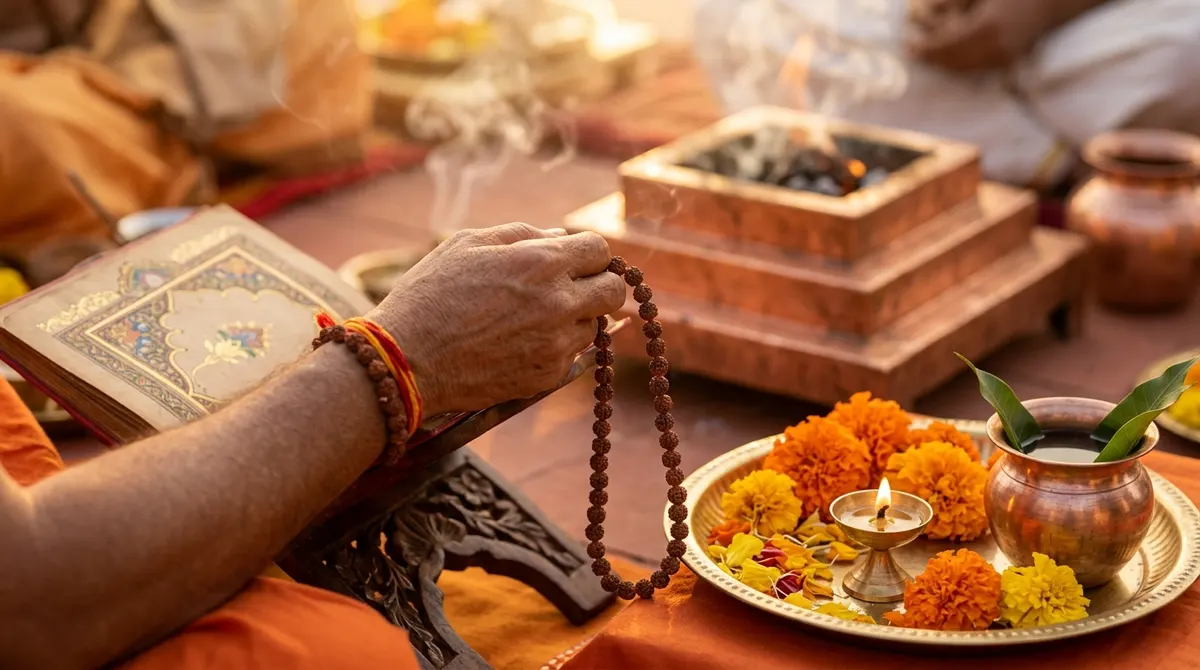
Proper preparation helps maintain purity and focus during the jaap. The space should be clean, quiet, and free from distractions. Participants are advised to bathe, wear clean clothes, and sit in a comfortable position facing east or north, as traditionally preferred. A mala of rudraksha or tulsi beads is commonly used for counting, and one should avoid crossing the beads while chanting.
Dietary and lifestyle discipline may be followed as per family custom — often light vegetarian food and avoiding negative speech. For longer counts like 11,000 or 1,25,000, the pandit will advise on breaks, timing, and whether to include supporting rituals like Rudrabhishek or havan. Divyanushthan pandits can guide families on practical arrangements, including helping with samagri and creating a realistic schedule for the jaap.
Step by Step Vidhi for Mahamrityunjay Jaap
While methods vary slightly, the following steps are commonly followed in North Indian homes for a Mahamrityunjay Jaap:
- Purification: Achaman, deep breathing, and cleaning the pooja space.
- Ganesh Pooja: Invoking Lord Ganesh to remove obstacles.
- Kalash Sthapana: Placing a kalash with water, mango leaves, and coconut as a symbol of divine presence.
- Sankalp: Taking the formal intention under pandit guidance.
- Jaap: Chanting the Maha Mrityunjaya Mantra using a mala, maintaining count and focus.
- Aarti and Prasad: Concluding with aarti, shanti mantra, and distribution of prasad.
- Havan (optional): Some families perform Rudra Havan after jaap for larger counts.
Benefits as Traditional Belief
In traditional Hindu belief, regular chanting of the Maha Mrityunjaya Mantra is said to bring peace of mind, reduce fear and anxiety, and promote overall wellbeing. Families often turn to this mantra for strength during difficult times. Many believe it creates a protective atmosphere at home and fosters mental clarity and spiritual growth. These are deeply held traditional beliefs, passed down through generations, and should be understood as such — not as medical treatment or guaranteed outcomes. Each family may experience the practice differently, based on faith and devotion.
Practical Tips and Checklist
Whether you are doing 108 repetitions or a larger count, these tips will help you perform the jaap meaningfully and without strain.
- Choose a quiet time and place with minimal distractions
- Use a proper mala and count carefully to avoid repetition errors
- Stay hydrated and take breaks for longer jaaps
- Focus on pronunciation; ask the pandit to correct if unsure
- Keep the space clean and maintain a calm mindset
- Plan realistic timing with the pandit for large counts
Why an Experienced Pandit Matters
For Mahamrityunjay Jaap, especially larger counts like 11,000 or 1,25,000, an experienced pandit provides invaluable guidance. They ensure correct pronunciation of the Vedic mantra, help frame an appropriate sankalp, advise on the right vidhi for your family tradition, and can include supporting rituals like Rudrabhishek or havan when needed. Divyanushthan connects families with verified Vedic pandits who can guide the family through every step, explain the meaning in simple terms, and help arrange samagri. With proper guidance, the jaap becomes a focused spiritual practice rather than a mechanical task, allowing the entire family to participate meaningfully.
Want this ritual done the authentic way?
Book Mahamrityunjay JaapFrequently Asked Questions
What is the difference between 108 vs 11,000 vs 1,25,000 mahamrityunjay jaap?
108 is ideal for daily practice and short devotion. 11,000 is a more intensive commitment, often done for a specific intention. 1,25,000 is considered a purashcharan-level count, requiring extended time and discipline under experienced guidance.
Can I do mahamrityunjay jaap on my own at home?
Yes, you can do it on your own, especially for 108 repetitions. For larger counts or if you are unsure about pronunciation, sankalp, or vidhi, guidance from an experienced pandit is recommended.
Do I need a mala for mahamrityunjay jaap?
Traditionally, a mala of 108 beads (usually rudraksha) is used to keep count. It also helps maintain focus. While not strictly mandatory, it is highly recommended for accurate counting.
Is mahamrityunjay jaap only for times of illness?
No. While it is commonly performed for wellbeing during difficult times, many families chant it regularly for peace, mental clarity, and spiritual growth. The practice is open to all as per traditional belief.
Can women and children participate in mahamrityunjay jaap?
Yes. In mainstream Hindu tradition, women and children can participate fully. The mantra is universal, and family participation is encouraged to create a peaceful, devotional atmosphere at home.
Related guides
 RitualsGriha Pravesh Pooja Vidhi: Steps for New HomeA clear step by step guide to griha pravesh pooja vidhi for entering a new home with Vedic prayers, havan, and family participation.7 min read
 RitualsGriha Pravesh Samagri List: Full ChecklistA practical griha pravesh samagri list with everything for kalash, pooja, havan, and kitchen customs, plus packing and shopping tips.7 min read
 RitualsSatyanarayan Katha Vidhi: Complete GuideA simple guide to satyanarayan katha vidhi with preparation, pooja steps, story meaning, and prasad tips for families.7 min read