Navgrah Shanti Puja: Vidhi, Samagri and Graha Mantras
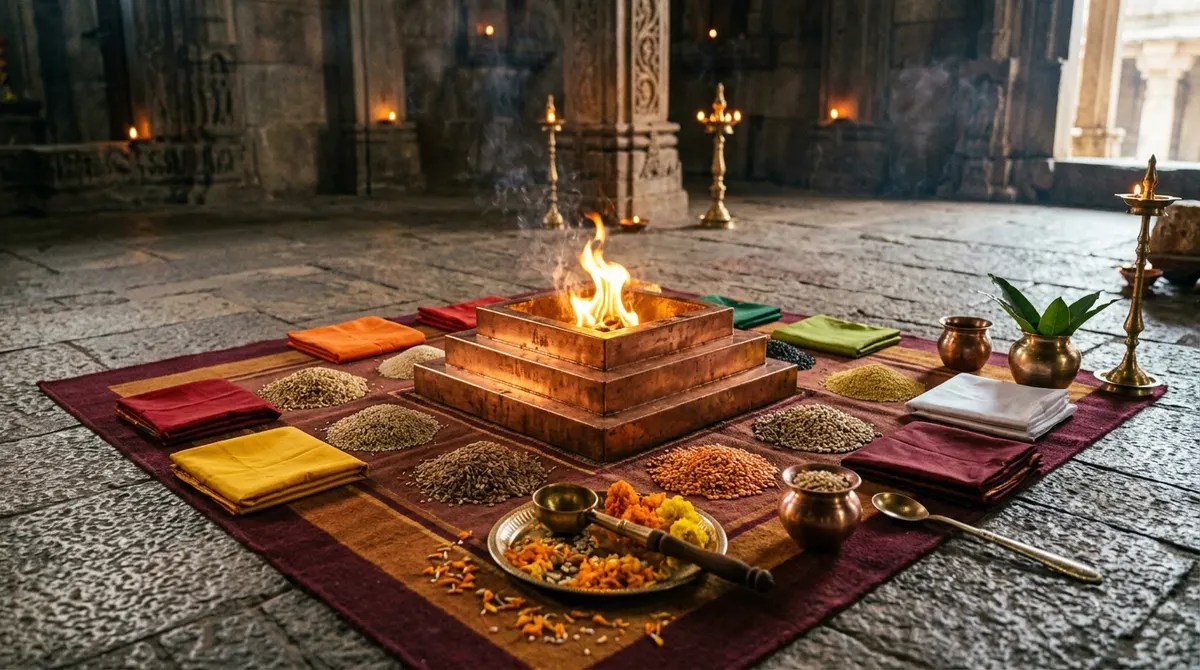
In this guide
- 1. What Is Navgrah Shanti Puja
- 2. The Nine Grahas in Jyotish Tradition
- 3. When Is Navgrah Shanti Puja Performed?
- 4. Well-Known Mantras of the Nine Grahas
- 5. Samagri Needed for Navgrah Shanti Puja
- 6. Step-by-Step Vidhi Outline of the Puja
- 7. Muhurat, Timing and Practical Notes
- 8. Practical Checklist Before You Book
- 9. Why an Experienced Pandit Matters
Want this ritual done the authentic way?
Book Navgrah Shanti PujaThe Nine Grahas in Jyotish Tradition
Each of the nine grahas has a symbolic role in Jyotish. Understanding them helps families see the navgrah shanti puja as a meaningful act of devotion rather than a superstitious fix. Regional variation exists — South Indian traditions additionally revere the Navagraha shrines where all nine are housed in a single shrine, while North Indian home poojas usually worship nine symbols or small images arranged in the traditional pattern.
- Surya (the Sun) – associated with the soul, vitality, authority and the father.
- Chandra (the Moon) – associated with the mind, emotions and the mother.
- Mangal (Mars) – associated with courage, energy and discipline.
- Budh (Mercury) – associated with intellect, speech and commerce.
- Guru or Brihaspati (Jupiter) – associated with wisdom, dharma and teachers.
- Shukra (Venus) – associated with relationships, refinement and happiness.
- Shani (Saturn) – associated with karma, patience and hard lessons.
- Rahu (north lunar node) – associated with ambition, obsession and worldly gain.
- Ketu (south lunar node) – associated with detachment and spiritual seeking.
Well-Known Mantras of the Nine Grahas
Mantras are the heart of graha worship. The following are widely known bija (seed) mantras chanted during the puja; your pandit may follow a slightly different family or sampradaya (lineage) form, so it is best to chant along with them. Each mantra is traditionally repeated 108 times with a mala while offering flowers to the corresponding graha:
- Surya: ॐ घृणिः सूर्याय नमः — Om Ghrinih Suryaya Namah
- Chandra: ॐ श्रां श्रीं श्रौं सः चन्द्रमसे नमः — Om Shraam Shreem Shraum Sah Chandramase Namah
- Mangal: ॐ अं अंगारकाय नमः — Om Ang Angarakaya Namah
- Budh: ॐ बुं बुधाय नमः — Om Bum Budhaya Namah
- Guru: ॐ बृं बृहस्पतये नमः — Om Bruum Brihaspataye Namah
- Shukra: ॐ द्रां द्रीं द्रौं सः शुक्राय नमः — Om Draam Dreem Draum Sah Shukraya Namah
- Shani: ॐ शं शनैश्चराय नमः — Om Sham Shanaishcharaya Namah
- Rahu: ॐ भ्रां भ्रीं भ्रौं सः राहवे नमः — Om Bhraam Bhreem Bhraum Sah Rahave Namah
- Ketu: ॐ स्रां स्रीं स्रौं सः केतवे नमः — Om Sraam Sreem Sraum Sah Ketave Namah
Step-by-Step Vidhi Outline of the Puja
While each pandit follows their own lineage, the sequence below reflects the vidhi (ritual method) commonly followed in North Indian homes. The exact mantras and number of oblations may differ, so follow your pandit's lead during the actual ceremony:
- Snana and achaman: the family bathes and the pandit performs preliminary purification.
- Ganesh Pooja: invoking Lord Ganesh so that the ritual proceeds without obstacles.
- Kalash Sthapana: placing the kalash with water, mango leaves and coconut, inviting divine presence.
- Sankalp: taking the formal intention — stating place, date, names and the purpose of the puja.
- Navgrah Avahan: inviting the nine grahas and worshipping each with its bija mantra, flowers and tilak.
- Havan: offering ghee and samagri into the sacred fire while chanting graha mantras.
- Aarti and Shanti Mantra: concluding with aarti, prasad distribution and a closing peace invocation.
- Dakshina and blessings: offering dakshina (ritual honour) to the pandit and receiving prasad.
Muhurat, Timing and Practical Notes
The choice of muhurat matters more than the day of the week alone. Traditionally, navgrah shanti puja is scheduled by consulting the panchang for a tithi (lunar day), vara (weekday), nakshatra (lunar mansion) and lagna (rising sign) that suit the family's intention. Some households prefer graha-specific weekdays — for example Tuesday for Mangal or Saturday for Shani — but the overall panchang picture takes priority. Never fix a date from a generic online calendar alone; even a broad "good day" can clash with a family member's kundli.
Duration depends on scale. A simple home puja with one pandit may take about an hour, while a full ceremony with a longer jaap and havan can run to several hours or be spread across a morning. Budget time for setting up the altar, laying out samagri, and letting elders participate at their own pace. Regional variation is common: some families add a Rudrabhishek, others pair the ritual with a Satyanarayan Katha, and coastal traditions may include a specific prasad recipe. None of these additions are mandatory — the core intention is what counts.
Practical Checklist Before You Book
Booking a navgrah shanti puja is straightforward once the details are settled — a short preparation list prevents last-minute stress and keeps the ceremony focused:
- Confirm family custom and consult a Jyotish reader before fixing any remedy
- Fix the muhurat with the pandit, not from a generic calendar
- Prepare the pooja space — clean, quiet, with seating for elders
- Lay out all samagri the night before and cross-check with the checklist
- Decide who will take the sankalp and keep names/gotra details ready
- Arrange prasad, water and light refreshments for guests
- Keep phones on silent; assign one family member to assist the pandit
Why an Experienced Pandit Matters
A navgrah shanti puja may look simple from the outside, but its quality depends on correct sankalp, proper pronunciation of the bija mantras, the right order of avahan (invocation) and a havan conducted with care. Small errors — a mispronounced mantra, a skipped kalash step, an intention framed vaguely — are common when families attempt the full sequence on their own for the first time. An experienced pandit also knows when NOT to prescribe a ritual: if a reading does not indicate a need, a good priest will say so plainly.
Divyanushthan connects families with verified Vedic pandits who can explain each step in simple terms, adapt the vidhi to your regional custom, help fix an appropriate muhurat, and assist in arranging the samagri so the day runs smoothly. Whether you are performing the ritual at home for the first time or continuing a family tradition, guidance from a knowledgeable pandit turns the ceremony from a checklist into a genuinely devotional experience for everyone involved.
Want this ritual done the authentic way?
Book Navgrah Shanti PujaFrequently Asked Questions
What is navgrah shanti puja performed for?
It is performed to honour the nine grahas and seek harmony with their influence, as understood in the Jyotish tradition. Families commonly perform it at griha pravesh, weddings, the birth of a child, or during Pitru Paksha. It is an act of devotion — benefits are traditional beliefs, not guaranteed outcomes.
Can navgrah shanti puja be done at home?
Yes. A qualified pandit can perform it in your home pooja space with a kalash, graha symbols and a small havan. The space should be clean and facing east or north as traditionally preferred. For larger ceremonies, a temple or pandit's established space may be more convenient.
Which day is good for navgrah puja?
The day is chosen from the panchang based on tithi, nakshatra, lagna and your family intention — not simply by weekday. Some families prefer graha-specific weekdays, but the overall panchang picture matters most. Always fix the muhurat with your pandit.
Do I need an astrologer before booking the puja?
It is recommended. A qualified astrologer should read the full kundli before any remedy is chosen, since a single placement never tells the whole story. If the reading does not indicate a need, the puja can still be performed as a voluntary act of devotion.
How long does the puja take?
A simple home observance with one pandit usually takes about an hour; a full ceremony with extended mantra jaap and havan can take several hours. Your pandit will advise based on the scale you choose.
Related guides
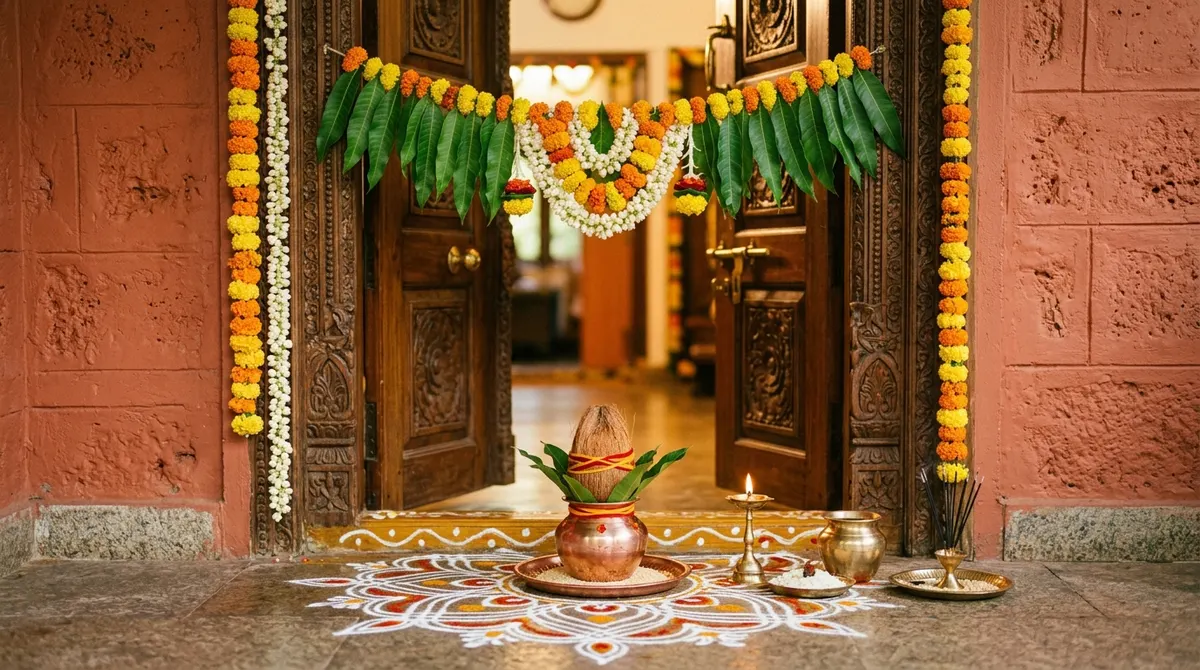 RitualsGriha Pravesh Pooja Vidhi: Steps for New HomeA clear step by step guide to griha pravesh pooja vidhi for entering a new home with Vedic prayers, havan, and family participation.7 min read
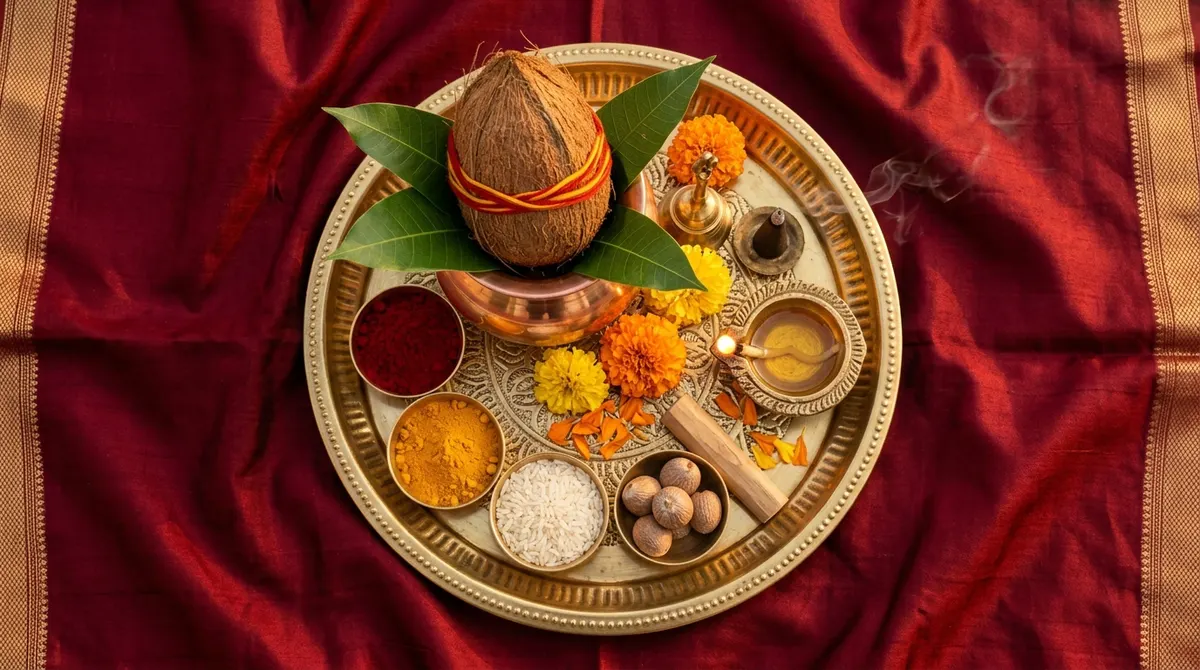 RitualsGriha Pravesh Samagri List: Full ChecklistA practical griha pravesh samagri list with everything for kalash, pooja, havan, and kitchen customs, plus packing and shopping tips.7 min read
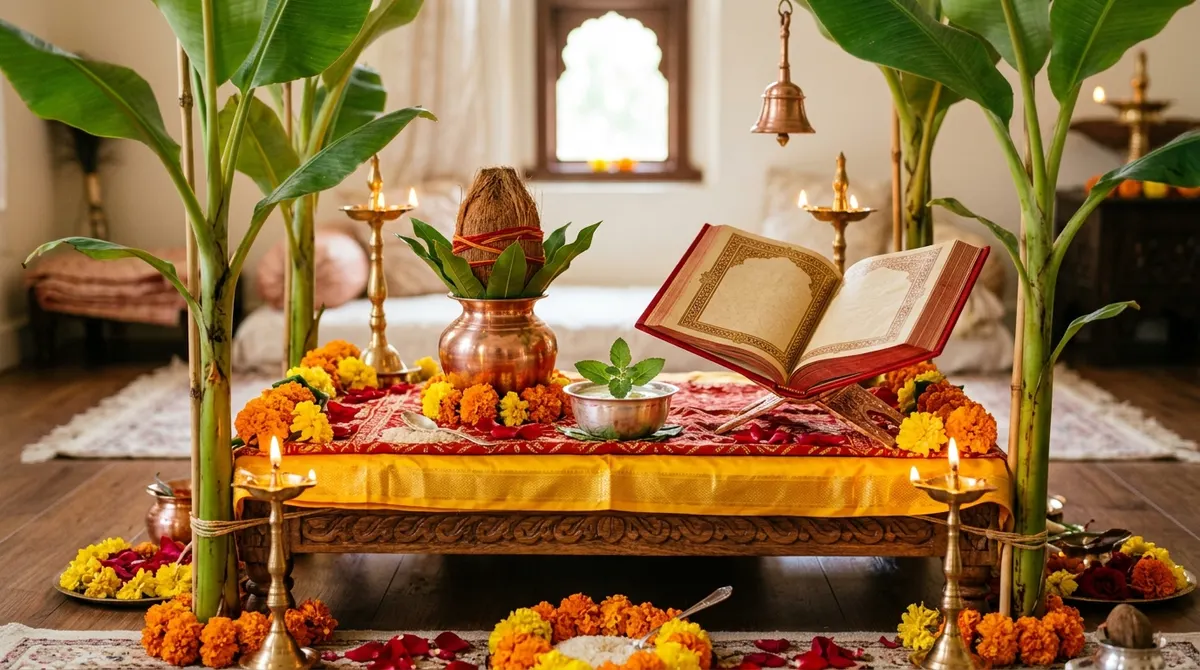 RitualsSatyanarayan Katha Vidhi: Complete GuideA simple guide to satyanarayan katha vidhi with preparation, pooja steps, story meaning, and prasad tips for families.7 min read