Satyanarayan Pooja Samagri List: Complete Guide
In this guide
What the satyanarayan pooja samagri list covers
The satyanarayan pooja samagri list is the complete set of items needed for the Satyanarayan Katha, the devotional worship of Lord Vishnu as Satyanarayan, the embodiment of truth. Samagri means the collected worship materials, so this list covers everything from the kalash, the sacred water vessel, to flowers, fruits, prasad ingredients, lamps and basic household helpers like mats and bowls. Having the full list ready before the pandit arrives keeps the ceremony calm and lets the family focus on listening to the story rather than searching for a missing item.
In common North Indian practice the ceremony is simple and joyful, usually lasting two to three hours including Ganesh pooja, kalash sthapana or installation, the main worship, five chapters of katha or sacred story, aarti or waving of lamps, and prasad distribution. Most families perform it on purnima, the full moon day, or on happy occasions such as a new home, marriage, childbirth or new business. Regional customs vary, and Maharashtrian, Gujarati and South Indian families may add or replace a few items, so treat this guide as a complete base and confirm small details with your pandit. For the full ceremony flow, see our guide on satyanarayan-katha-vidhi as further reading.
Want this ritual done the authentic way?
Book Satyanarayan KathaKalash and main altar items
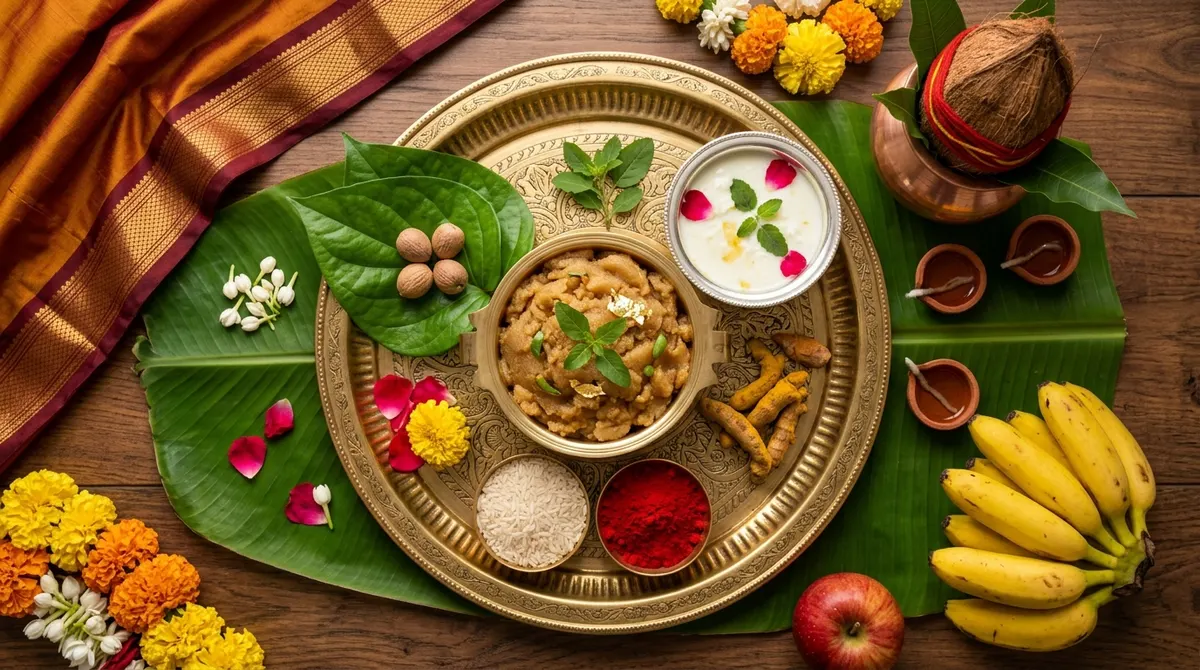
The kalash is the centre of the altar and deserves first attention. You will need a clean brass, copper or steel lota or pot for the kalash, fresh water mixed with a little Gangajal or sacred Ganga water if available, mango or betel leaves for the rim, a whole coconut with husk for the top, red or yellow cloth to wrap the coconut, a coin, a supari or betel nut, unbroken rice grains known as akshat, and sandalwood paste. Place a framed image or small idol of Lord Satyanarayan or Vishnu along with Lord Ganesh on a low wooden platform covered with a clean red or yellow cloth.
Around the deities keep the everyday worship helpers: two oil lamps or diyas with oil or ghee and cotton wicks, matchboxes, incense sticks, camphor for aarti, a bell, a small conch if your family uses one, and two clean plates for offerings. Keep a copper spoon and small bowls for offering water, plus a clean white cloth for wiping. If you do not own a particular item such as a conch or brass bell, do not worry, since the pandit can adjust the ritual with what is available, and this flexibility is normal across households.
- Kalash pot, coconut, mango leaves, red cloth, coin, supari, akshat
- Idols or framed images of Satyanarayan and Ganesh, clean altar cloth
- Two diyas, oil or ghee, cotton wicks, matchboxes, incense, camphor
- Bell, offering plates, copper spoon, small bowls for water and milk
Flowers, leaves and fragrances
Flowers bring freshness to the altar and are offered at every stage, from Ganesh pooja to the five katha chapters. Arrange marigold garlands for the frame and door, plus loose mixed flowers such as rose, jasmine and marigold for offering during chanting. Tulsi leaves, the holy basil, are especially dear to Lord Vishnu and are added to panchamrit and prasad with care. Keep mango leaves for the toran or door hanging, betel leaves for offering, durva grass for Ganesh pooja, and a small bunch of barley or wheat shoots if your family tradition includes them.
For fragrance and anointing, keep sandalwood paste or powder, kumkum or red vermilion, haldi or turmeric, gulal or abir if your family uses it, rose water and a small bottle of attar or scent. These items are used in small quantities, so small packs are enough for one ceremony. Keep flowers in a cool place and sprinkle water lightly so they stay fresh until the pandit arrives. After the pooja, handle leftover flowers respectfully by immersing them in a garden or under a tree rather than throwing them in household waste.
Panchamrit and prasad ingredients
Prasad or sanctified food is the heart of the Satyanarayan Katha, and preparing it fresh on the day is part of the devotion. For panchamrit, the five item sacred mixture, keep milk, curd, ghee or clarified butter, honey and sugar, plus tulsi leaves and a little Gangajal. Mix them in a clean steel bowl just before the offering moment so the mixture stays fresh. A spoonful of this mixture is later shared as charnamrit or sanctified liquid, so keep small steel bowls and spoons ready for distribution to guests.
For the classic halwa style prasad, keep wheat flour, ghee, sugar, ripe bananas, chopped dry fruits such as cashew, almond and raisins, cardamom powder and a little milk. Some families also prepare kheer or sweet rice, lapsi or sweet dalia, and keep dry fruits and mishri or sugar crystals for offering. Cook prasad after bathing in a clean kitchen, keep it covered until the offering, and prepare enough for all guests plus a few extra packs since neighbours often join for aarti. For guests with milk, nut or gluten allergies, keep separate fruit prasad of banana, apple, pomegranate and coconut, and inform guests clearly.
- Panchamrit: milk, curd, ghee, honey, sugar, tulsi leaves
- Halwa prasad: wheat flour, ghee, sugar, banana, dry fruits, cardamom
- Fruits, coconut, betel leaves, supari, mishri for offering
- Steel bowls, spoons, glasses, carry bags for prasad distribution
Food, grains and offering items
Beyond prasad, the ritual uses small quantities of grains and symbolic offerings. Keep unbroken rice or akshat in a bowl for offering during sankalp, the formal statement of intention, and throughout the sixteen step worship known as shodashopachar pooja. Keep wheat grains, barley or jau, black sesame or til, supari, almonds, coins and a little cotton garland or yajnopaveet or sacred thread for offering. A well-known chant you will hear at this stage is Om Namo Bhagavate Vasudevaya, written as ॐ नमो भगवते वासुदेवाय, meaning salutation to Vasudeva, the all pervading Lord.
For the family meal after the ceremony, most households cook simple sattvik vegetarian food without onion, garlic and alcohol on the day, out of respect for the vow. This is a matter of family custom rather than a strict rule for every member, so follow your own tradition. Keep drinking water, jaggery, honey and ghee in small clean bowls on the altar for offering. After the pooja, dry leftover rice, wheat and coins can be stored respectfully or given in charity as your pandit advises, and perishable prasad should be shared the same day.
Clothes, seating and household helpers
Comfort items matter because guests sit for two to three hours. Spread clean mats, carpets or white sheets near the altar with enough space for the main couple or family head to sit beside the pandit. Keep extra cushions for elders, low stools for those who cannot sit on the floor, and a quiet corner with water for small children. Decorate the entrance with a mango leaf toran, rangoli at the door, and two lamps on either side of the altar for a warm and welcoming look.
Keep practical helpers in one corner so nobody interrupts the sankalp to fetch things: extra matchboxes, a small knife for coconuts and fruits, newspapers for flower waste, towels, buckets of clean water, dustbin covers, and bags for prasad packing. Keep new or freshly washed traditional clothes ready for those sitting in the pooja, since clean dress is part of the preparation. Ask guests to arrive fifteen minutes early and keep phones silent, so the story narration remains the focus from the first verse to the final aarti.
Night-before checklist for hosts
A short checklist finished the night before removes all morning stress. Confirm the pandit arrival time, parking, expected duration, language of narration and whether he will bring the katha book or you should keep your family copy ready. Buy perishables like milk, curd, bananas and fresh flowers for the same morning or previous evening, and store them properly. Arrange dry items, lamps, incense, camphor, coins, cloth, mats and prasad packing bags in one room so nothing is scattered across the house.
Assign simple duties so the host can sit for the full ceremony without getting up. One person can welcome guests, one can manage prasad packing, and one can handle photos quietly from the side without flash during chanting. Keep dakshina or traditional offering to the pandit, fruits and a return gift bag ready in one corner. Test fans, lights and sound so elders can hear the narration clearly. A calm, organised start helps everyone listen, pray and share prasad with full attention.
- Confirm pandit time, duration, language, katha book and parking
- Buy milk, curd, fruits, flowers fresh and store them properly
- Lay out altar cloth, kalash set, lamps, incense, offering plates
- Prepare prasad ingredients, bowls, spoons, glasses and packing bags
- Arrange seating, water, fans, dakshina and return gifts in one place
Why an experienced pandit matters
An experienced pandit turns a long shopping list into a smooth ceremony. Correct sequence, clear pronunciation and simple explanation matter because the Katha blends Sanskrit verses with long story passages across five chapters. A trained pandit knows what can be adjusted if an item is missing, where to pause for explanation, how to conduct the sankalp with correct names and intention, and how to involve children and elders without rushing. Families who try to manage from printed lists alone often feel unsure about order and timing, while guided families can simply follow along.
Divyanushthan pandits can guide the family before the day on what to buy, what the pandit will bring, how to arrange the pooja space and how long the ceremony will take, and they help arrange samagri so nothing important is missed. The pandit can perform the full Katha at home or guide parts of it online where an in person visit is not possible, depending on the service chosen. Tradition describes peace, harmony and clarity as blessings received with faith and good conduct, not as guaranteed outcomes. With complete preparation and kind guidance, the family can listen to the stories, join the aarti and share prasad with joy.
Want this ritual done the authentic way?
Book Satyanarayan KathaFrequently Asked Questions
What is the minimum samagri for Satyanarayan pooja at home?
At minimum keep a kalash set with coconut and leaves, images of Vishnu and Ganesh, diyas, incense, flowers, tulsi, akshat, fruits, panchamrit ingredients and halwa prasad ingredients. Your pandit can adjust the ritual if a small item is unavailable.
How much prasad should we prepare for the Katha?
Prepare enough halwa prasad and panchamrit for all invited guests plus a little extra for neighbours who may join for aarti. Keep separate fruit prasad for those with allergies and share perishable prasad the same day.
Who arranges the samagri, the family or the pandit?
In common practice the family arranges most items from a list shared in advance, while the pandit may bring special ritual items or the katha book. Divyanushthan pandits can guide you on the split and help arrange samagri so nothing is missed.
Can the samagri list change by region or family custom?
Yes, small variations exist across Maharashtrian, Gujarati, South Indian and North Indian households, such as different katha books or extra offerings. Follow your family custom and confirm any additions with your pandit before shopping.
When should we buy flowers, milk and fruits for the pooja?
Buy perishables like milk, curd, bananas and fresh flowers the same morning or previous evening and store them cool and covered. Keep all dry items, lamps, cloth and coins ready the night before for a calm start.
Related guides
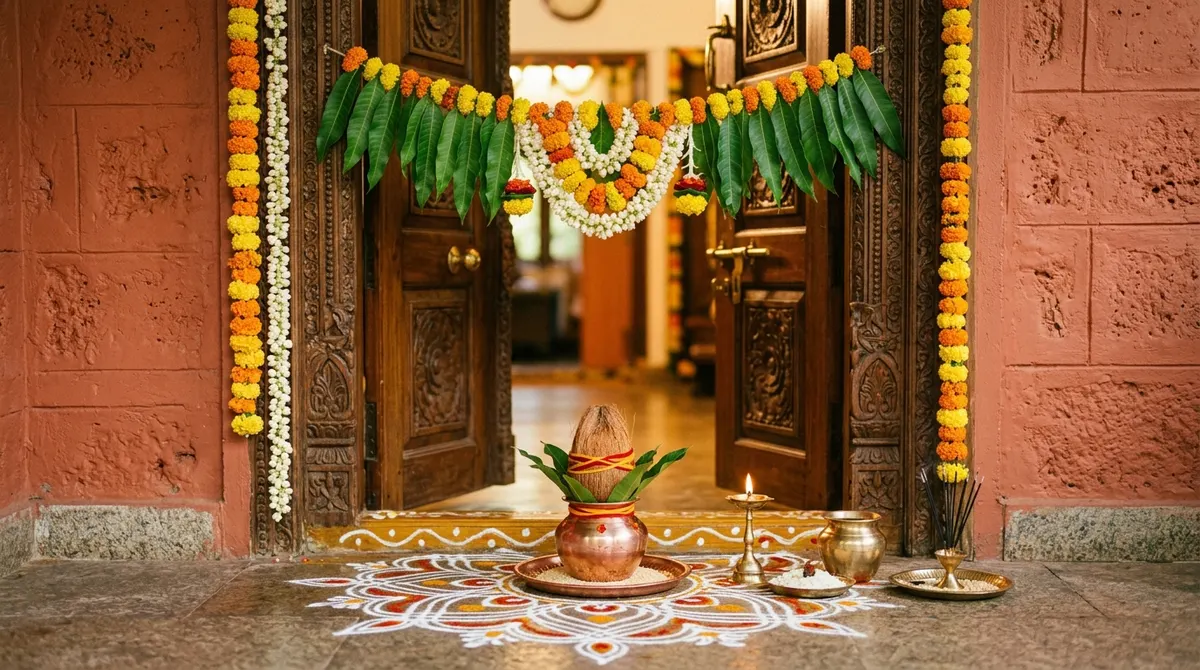 RitualsGriha Pravesh Pooja Vidhi: Steps for New HomeA clear step by step guide to griha pravesh pooja vidhi for entering a new home with Vedic prayers, havan, and family participation.7 min read
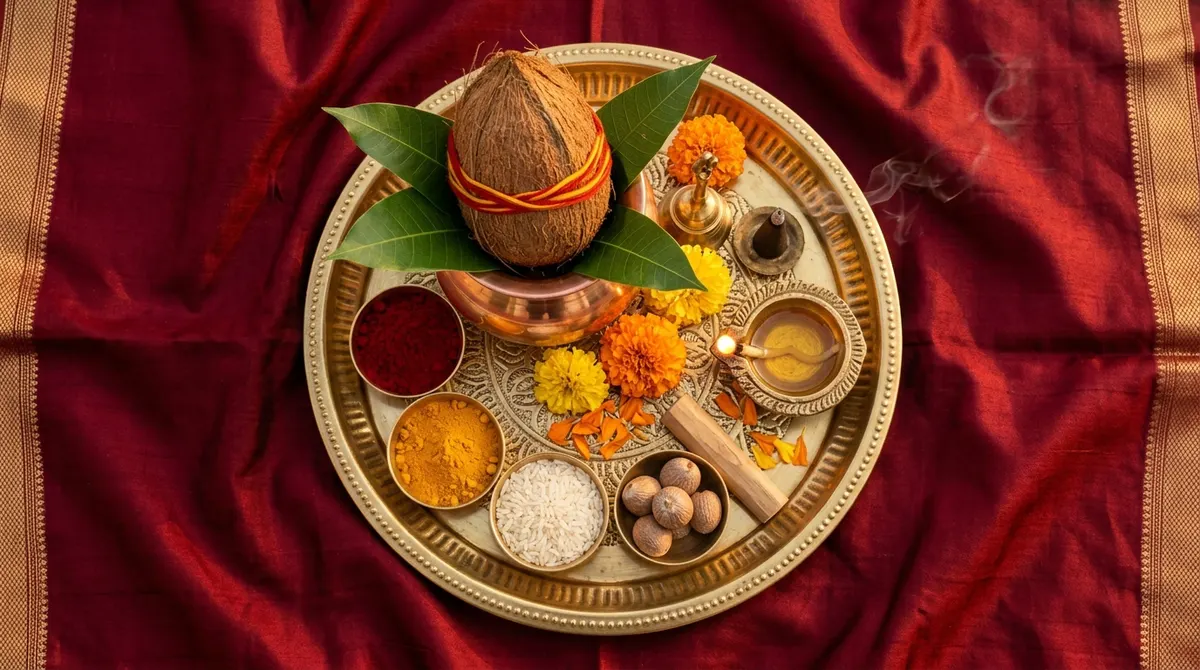 RitualsGriha Pravesh Samagri List: Full ChecklistA practical griha pravesh samagri list with everything for kalash, pooja, havan, and kitchen customs, plus packing and shopping tips.7 min read
 RitualsSatyanarayan Katha Vidhi: Complete GuideA simple guide to satyanarayan katha vidhi with preparation, pooja steps, story meaning, and prasad tips for families.7 min read