What Is Sankalp in Pooja? Meaning and Gotra
In this guide
- 1. What is sankalp in pooja
- 2. Why sankalp comes first in every ritual
- 3. What is gotra and why the pandit asks for it
- 4. What to tell the pandit for sankalp
- 5. What if gotra is unknown: the Kashyap practice
- 6. How sankalp is actually spoken
- 7. Checklist for a calm and confident sankalp
- 8. Why an experienced pandit matters
What is sankalp in pooja
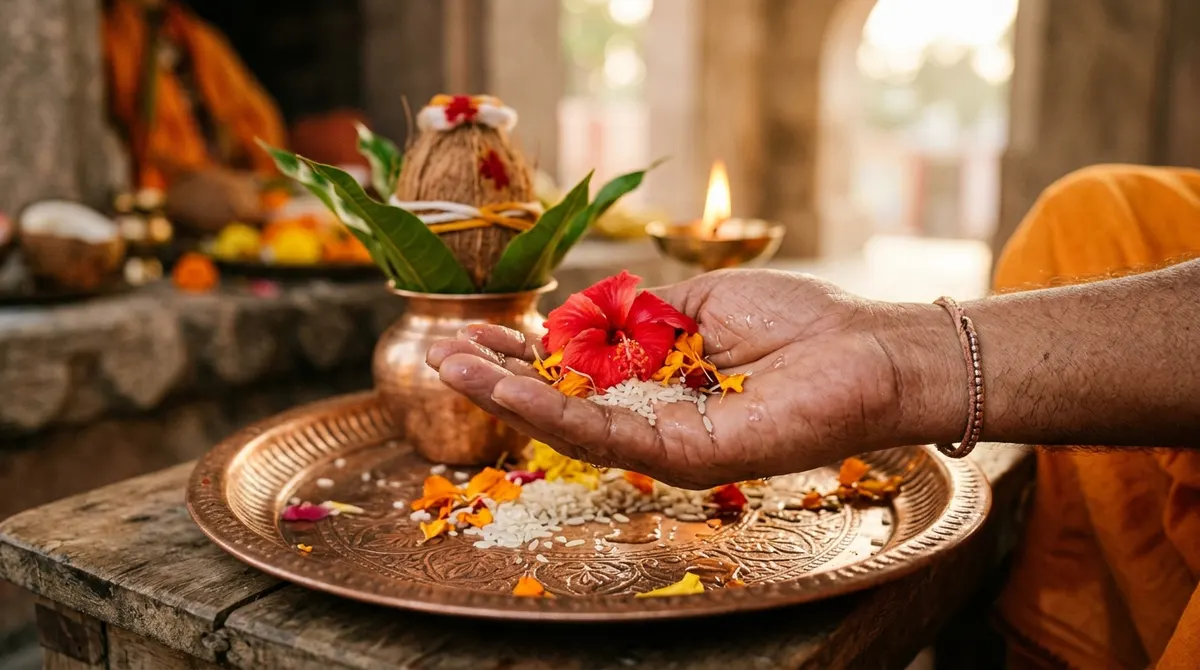
What is sankalp in pooja is a question almost every family asks before their first home ceremony, and the answer is beautifully simple. Sankalp means a formal and heartfelt statement of intention spoken at the start of worship. Holding water, flowers, rice and a coin in the palm, the family repeats after the pandit their names, place, time, family tradition and the purpose of the pooja, such as peace, health, gratitude or a new beginning. This short moment turns a routine gathering into a conscious act of devotion where everyone knows why they have come together.
In mainstream North Indian practice, sankalp comes after Ganesh remembrance and before the main worship, whether the ceremony is a Satyanarayan Katha, Griha Pravesh, Rudrabhishek or Shradh rite. The pandit speaks slowly, the family listens and repeats key words, and the water is then gently released into a plate as a symbol of offering the intention to the divine. Tradition views sincerity as more important than perfect pronunciation, so first time hosts should feel relaxed. Regional wording may differ, and the pandit will adjust the phrasing to your language and custom without changing its meaning.
Want this ritual done the authentic way?
Book a Pandit for Your PoojaWhy sankalp comes first in every ritual
Sankalp comes first because Hindu tradition treats intention as the seed of the ritual. Just as a letter needs an address before posting, a pooja needs a clear direction before chanting begins. By naming the deity, the occasion, the place and the desired wellbeing, the family gives the ceremony focus and invites full attention from young and old alike. Elders often say that a pooja performed with a clear and calm mind carries more feeling than a longer ritual done in distraction.
From a practical view, sankalp also settles the room. Guests stop chatting, phones go silent, children sit near parents, and the pandit learns who the main hosts or yajmans are for the day. The yajman means the host on whose behalf the ritual is performed, usually the head of the family or the couple celebrating the occasion. Once the sankalp is complete, the family can follow the rest of the pooja with confidence, knowing the purpose has been stated and blessed. Tradition describes benefits such as peace and clarity as blessings received with faith and good conduct, not as guaranteed outcomes.
What is gotra and why the pandit asks for it
Gotra is the ancestral lineage or clan name that many Hindu families remember and recite during rituals. In tradition, gotra traces the family to an ancient rishi or sage, such as Kashyap, Vashishtha, Bharadwaj, Gautam or Shandilya, and it helps identify the family line in religious and social records. During sankalp the pandit usually asks for the gotra of the main host along with names, so the intention can be spoken in the traditional format that includes lineage. Think of it as the family surname of the spiritual record.
Different regions give gotra different weight, and customs vary. In many North Indian families the gotra is well known and passed down from father to children, while in some South and West Indian customs the maternal or marriage lineage rules may apply differently. Inter-caste and inter-regional marriages, adoption, or simply loss of records can create genuine confusion. A patient pandit will never embarrass a family over this question, and will calmly explain options, which is one reason an experienced and sensitive pandit matters so much for home rituals.
What to tell the pandit for sankalp
For a smooth sankalp, keep four details ready before the pandit arrives: full names of the main hosts, gotra if known, current place of residence, and the purpose or occasion of the pooja. If the pooja is for a child, a new home, health recovery or ancestors, say so in plain words so the pandit can phrase the intention correctly. Newly married couples can share both families and gotra details, and the pandit will guide on which to recite. Keep the pronunciation of names written on a slip of paper if they are long or unusual.
Also share practical facts that affect the wording: whether all hosts are present or someone is joining online, whether the family follows a particular Veda branch or local custom, and which language you prefer for explanation. The pandit may also ask for the lunar date or tithi, but you do not need to calculate it yourself, since he will determine it from the calendar. Arrive at the altar five minutes early with washed hands, clean clothes, and the whole host family seated together, so the sankalp begins without calling people from other rooms.
- Full names of main hosts and family members included in the prayer
- Gotra if known, plus marriage or regional details if relevant
- City and occasion in plain words, such as new home or gratitude
- Language preference and who is present in person or joining online
What if gotra is unknown: the Kashyap practice
Many families worry when they do not know their gotra, but this situation is common and has a traditional solution. When the gotra is genuinely unknown, the common practice in many North Indian lineages is to recite Kashyap gotra for the purpose of the ritual, since Kashyap Rishi is regarded in tradition as a primeval sage connected with creation. The pandit may say Kashyap gotra with a clear conscience as a placeholder so the ceremony can proceed smoothly and respectfully. This is a matter of customary practice, not a rule written identically in every text, and regional pandits may phrase it slightly differently.
What matters most is honesty and calm. Tell the pandit plainly that the gotra is not known in your family, and do not guess or invent a name to sound confident. The pandit will then use the accepted customary wording and complete the sankalp without any awkwardness. After the pooja, you can ask elders, family priests or community records at leisure, and use any confirmed gotra from the next ceremony onward. No family should feel lesser for not knowing, since migration, memory loss and mixed marriages affect countless households today.
How sankalp is actually spoken
First time hosts often fear long Sanskrit, but the actual process is gentle and guided word by word. The pandit pours a little water into your cupped right palm, places flowers, rice and a coin on top, and asks you to cover it lightly with the left hand. He then chants the place, time, names, gotra and purpose in a steady rhythm, pausing after each phrase so you can repeat. You simply listen, repeat short phrases, and nod when he confirms the intention. The water is then released into a plate or vessel while he chants a closing verse.
A short phrase you may hear at the close is Om Tat Sat, written as ॐ तत् सत्, meaning the divine truth alone is real, offered as a dedication of the act to the supreme. You do not need to memorise anything, and minor slips in repetition carry no fault, since the pandit leads throughout. Keep your mind on the purpose, breathe calmly, and let children watch quietly from beside you so they learn by observation. After sankalp, the main worship begins, and the family can sit back and follow the pandit with ease.
Checklist for a calm and confident sankalp
A little preparation turns sankalp from a nervous moment into a memorable one. The night before, write host names, gotra status and the occasion on one slip of paper and keep it near the altar. Lay out a clean plate, a small water vessel, flowers, unbroken rice, a coin and a towel for wiping hands. Ask all hosts to bathe, wear fresh clothes, and reach the altar five minutes early with phones silent. Seat elders comfortably with back support and children beside parents.
During the sankalp, hold the palm steady, repeat only when the pandit pauses, and do not worry about perfect accent. If you did not understand a line, smile and continue, then ask its meaning after the pooja when the pandit is free. After the water is released, avoid getting up immediately, since the main worship follows directly. Keep drinking water nearby but do not place food on the altar until the pandit invites the offering. These small courtesies keep the energy of the room steady from intention to aarti or waving of lamps.
- Name slip, gotra note, occasion and language preference ready
- Plate, water vessel, flowers, rice, coin and towel near the altar
- Hosts bathed, fresh clothes, seated together five minutes early
- Phones silent, elders comfortable, children beside parents
- Repeat calmly after the pandit and ask meanings after the pooja
Why an experienced pandit matters
Sankalp looks short on paper, yet it sets the tone for the entire ceremony, which is why an experienced pandit matters. Correct names, correct lineage wording, correct occasion and a warm explanation help the family feel included rather than confused. A trained pandit handles sensitive moments with grace, such as unknown gotra, mixed customs after marriage, or guests from different regions, and explains each line in simple language. He also adjusts pace for elders, involves children gently, and keeps the transition into main worship smooth and unhurried.
Divyanushthan pandits can guide the family before the day on what details to keep ready, how sankalp will be conducted, how long the full pooja will take, and how to arrange the altar and samagri or worship materials, and they help arrange samagri so nothing is missed. They can perform the pooja at home or guide the family online where an in person visit is not possible, depending on the service chosen. No guaranteed outcomes are promised, since tradition views peace and wellbeing as blessings received with faith and good conduct. With kind guidance, the family can speak its intention clearly and enjoy the rest of the ritual with full attention.
Want this ritual done the authentic way?
Book a Pandit for Your PoojaFrequently Asked Questions
Do all family members need to sit for sankalp?
Ideally the main hosts sit for sankalp while others sit quietly behind them. If someone is unwell or joining online, inform the pandit in advance so names can be included and the wording adjusted with care.
What if we do not know our gotra?
Tell the pandit honestly that the gotra is unknown. In many North Indian lineages the common practice is to recite Kashyap gotra as a respectful placeholder so the ritual proceeds smoothly. You can confirm your family gotra later from elders or records.
Does the wife use her father or husband gotra after marriage?
Custom varies by region and family, with some traditions reciting the husband family gotra and others keeping the birth family usage for certain rites. Share both details with your pandit and follow your family custom as he guides.
Must sankalp be in Sanskrit only?
The core wording is usually in Sanskrit, but experienced pandits explain each line in Hindi, English or the local language. Ask for simple explanation in advance so children, elders and guests can follow the meaning.
What should we do if we make a mistake while repeating?
Do not worry or stop the ritual. Minor slips carry no fault since the pandit leads throughout. Continue calmly, and ask the meaning of any line after the pooja when the pandit is free.
Related guides
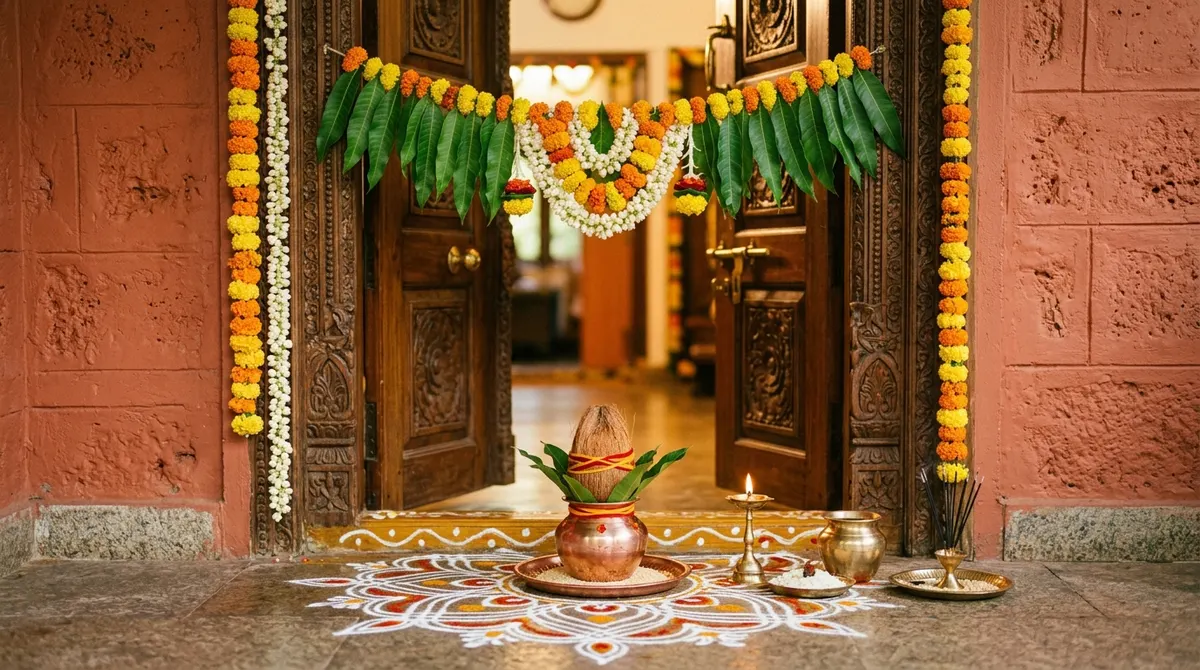 RitualsGriha Pravesh Pooja Vidhi: Steps for New HomeA clear step by step guide to griha pravesh pooja vidhi for entering a new home with Vedic prayers, havan, and family participation.7 min read
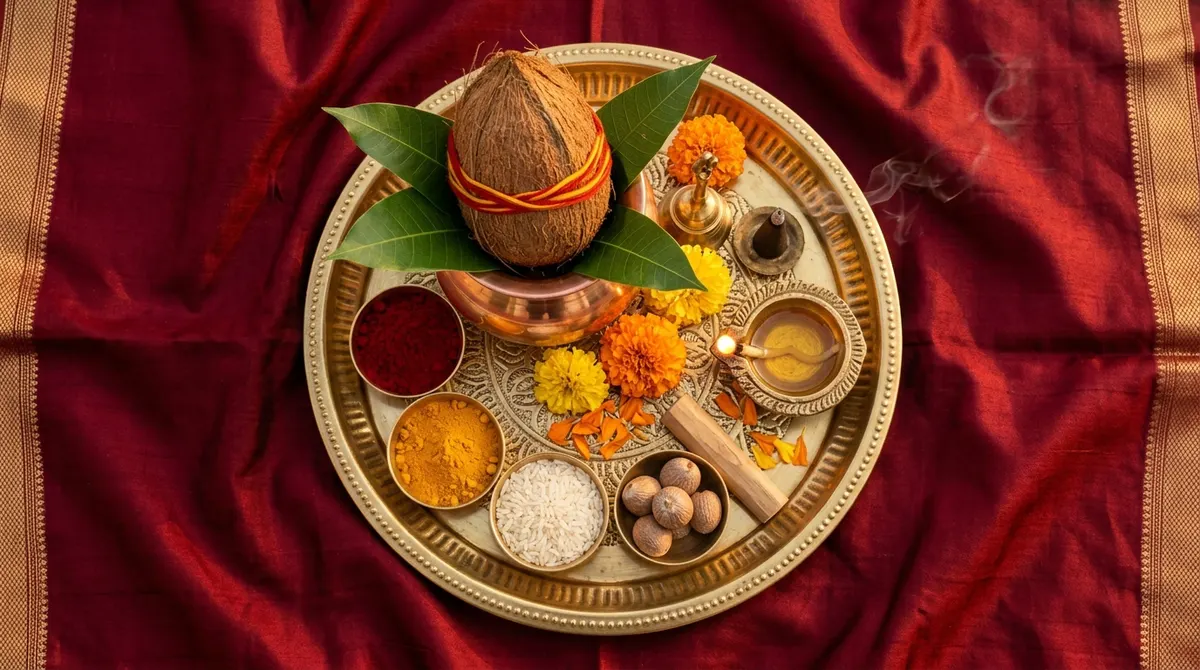 RitualsGriha Pravesh Samagri List: Full ChecklistA practical griha pravesh samagri list with everything for kalash, pooja, havan, and kitchen customs, plus packing and shopping tips.7 min read
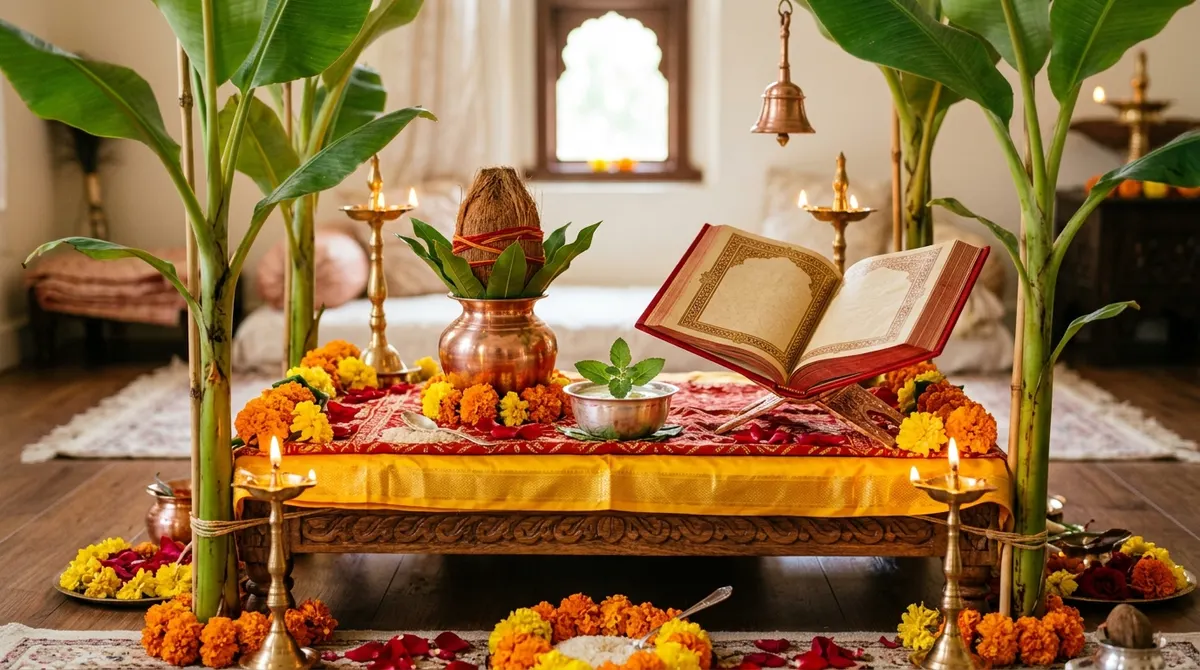 RitualsSatyanarayan Katha Vidhi: Complete GuideA simple guide to satyanarayan katha vidhi with preparation, pooja steps, story meaning, and prasad tips for families.7 min read